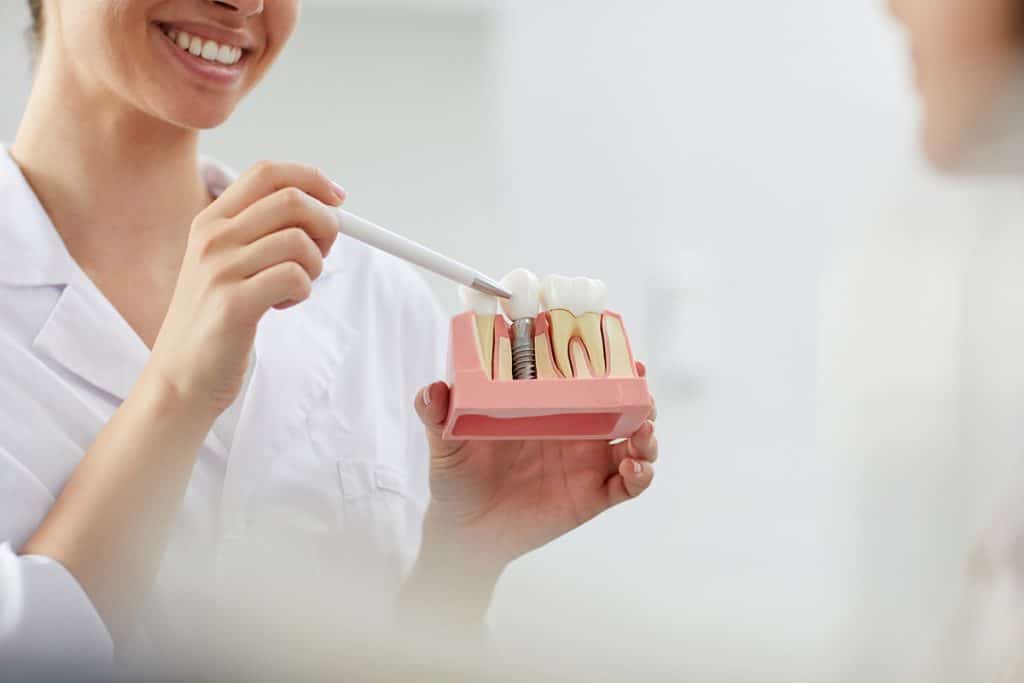
Dental implants are one of today’s best tooth replacement options. Implants function, look, and feel like healthy, natural teeth.
Dental implants replace the tooth as a whole, from the root to the crown. The implant post securely bonds with the jawbone, preventing deterioration and giving the crown a secure base.
What Are Dental Implants? Understanding the Basics
Dental implants represent the most advanced solution for tooth loss available in modern dental practice. Unlike traditional bridge work or dentures, they are permanent artificial tooth roots surgically placed into your jaw bone to support replacement teeth.
When you experience tooth loss due to injury, tooth decay, or disease, the impact extends beyond aesthetics. Missing teeth affect your ability to eat, speak clearly, and maintain proper oral health. Dental implants offer a permanent solution that closely mimics natural tooth structure and function.
Key Characteristics of Implants Dentistry:
- Surgically embedded into the jaw bone
- Made from biocompatible titanium or zirconia
- Fuse with natural bone through osseointegration
- Provide stable foundation for crown, bridge, or denture
- Preserve jaw bone density and facial structure
- Restore full chewing function
Why Implants Are Superior to Traditional Options
Traditional tooth replacement methods like removable dentures or fixed bridge work require grinding down healthy adjacent teeth or using adhesives that limit chewing ability. Implants, however, stand independently without compromising surrounding teeth.
Advantages Over Traditional Methods:
- Bridge work requires altering healthy neighboring teeth
- Dentures can slip during eating or speaking
- Dental implants preserve natural bone structure
- No dietary restrictions once healing is complete
- Superior comfort and natural feel in the mouth
- Long-term cost-effectiveness
What Is a Dental/Tooth Implant? Components Explained
Understanding how do dental implants work begins with knowing the three essential components that make up a complete dental implant system. Each part plays a critical role in creating a functional, natural-looking replacement tooth.
The Three Essential Components
1. The Implant Post (Artificial Root)
implant dentistry post serves as the artificial tooth root embedded directly into your jaw bone. This critical component is typically constructed from medical-grade titanium, chosen for its exceptional biocompatibility and ability to fuse with natural bone through osseointegration.
Implant Post Specifications:
- Material: Titanium alloy or zirconia ceramic
- Length: 8-16mm depending on jaw bone height
- Diameter: 3-6mm based on tooth position
- Surface: Textured to promote bone integration
- Thread design: Facilitates initial stability
2. The Abutment (Connector)
The abutment connects the implant post beneath your gums to the visible crown above. This middle component is customized to ensure proper emergence from the gum tissue and optimal support for the final restoration.
Abutment Features:
- Positioned at gum line level
- Custom-angled for proper tooth positioning
- Made from titanium, zirconia, or gold alloy
- Screwed or cemented to implant post
- Sealed to prevent bacterial infiltration
3. The Crown (Visible Tooth)
The crown represents the visible portion of your replacement tooth, custom-designed to match your natural teeth in color, shape, and function. This restoration is what you see when you smile and use for chewing.
Crown Characteristics:
- Custom-fabricated porcelain or ceramic
- Color-matched to adjacent teeth
- Designed for proper bite alignment
- Natural translucency and appearance
- Durable for normal chewing forces
The Purpose of Dental Implants
implants serve multiple critical purposes beyond simply filling gaps in your smile. Understanding these purposes helps patients appreciate the comprehensive health benefits this treatment provides.
Primary Purposes of Implants Dentistry
1. Restoring Complete Oral Function
Tooth loss significantly impairs your ability to eat nutritious foods comfortably. Tooth implants restore full chewing capacity, allowing patients to enjoy all foods without restriction or pain.
Functional Restoration:
- 95-98% of natural chewing force restored
- No dietary limitations after healing
- Improved digestion through proper food breakdown
- Natural speech patterns maintained
- Confidence during eating in social situations
2. Preserving Jaw Bone Structure
When you lose a tooth, the surrounding jaw bone begins deteriorating due to lack of stimulation. This process, called bone resorption, can lead to facial structure changes and complicate future dental treatments.
Bone Preservation Benefits:
- Stimulates jaw bone like natural tooth roots
- Prevents bone loss and facial sagging
- Maintains proper facial proportions
- Preserves bone volume for future dental work
- Reduces aging appearance associated with tooth loss
3. Protecting Adjacent Teeth
Traditional bridge work requires grinding down healthy neighboring teeth to serve as anchors. Implants eliminate this need, preserving your natural dental structure.
Protective Advantages:
- No alteration of adjacent healthy teeth
- Maintains natural tooth enamel
- Prevents shifting of surrounding teeth
- Reduces risk of tooth decay in neighboring teeth
- Preserves long-term oral health
4. Enhancing Overall Health and Quality of Life
The impact of tooth loss extends beyond oral health, affecting nutrition, self-esteem, and social interactions. Implants address these broader health concerns.
Comprehensive Health Benefits:
- Improved nutritional intake and overall health
- Enhanced self-confidence and smile aesthetics
- Better oral hygiene maintenance
- Prevention of gum disease around remaining teeth
- Positive impact on mental health and social wellbeing
How Do Dental Implants Work? The Science Behind It
How do dental implants work is one of the most frequently asked questions at our clinic. The answer lies in a remarkable biological process called osseointegration, where your natural bone fuses with the titanium implant post.
The Biological Process of Osseointegration
Osseointegration represents the foundation of successful implant dentistry. This process, discovered by Swedish orthopedic surgeon Per-Ingvar Brånemark in the 1950s, explains why titanium implants integrate so successfully with human bone.
Phase 1: Initial Healing (Weeks 1-4)
Immediately after surgery, your body begins forming a blood clot around the implant site. This clot provides the foundation for new tissue growth and bone formation.
Early Healing Process:
- Blood clot formation protects surgical site
- Inflammatory response initiates healing
- New tissue begins forming around implant
- Gum tissue closes over surgical area
- Bone cells start migrating to implant surface
Phase 2: Bone Growth & Integration (Months 2-4)
During this critical period, specialized bone cells called osteoblasts begin depositing new bone material directly onto the titanium implant surface. This creates a mechanical and biological bond between the implant and your jaw.
Integration Characteristics:
- New bone grows in direct contact with titanium
- Bone density increases around implant
- Implant becomes increasingly stable
- Tissue maturation continues
- Temporary pain subsides as healing progresses
Phase 3: Maturation & Remodeling (Months 4-6+)
The final phase involves bone remodeling and strengthening around the implant. Your jaw bone adapts to the implant’s presence, creating maximum stability for the final restoration.
Maturation Process:
- Bone density reaches optimal levels
- Implant achieves maximum stability
- Gum tissue fully heals and shapes around abutment
- Ready for final crown placement
- Complete functional restoration achieved
Why Titanium Works So Well
Titanium is the gold standard material for dental implants due to its unique properties that facilitate osseointegration. This biocompatible metal encourages bone growth while resisting corrosion in the mouth environment.
Titanium Advantages:
- Biocompatible with human tissue
- Oxide layer encourages bone attachment
- Lightweight yet extremely strong
- Corrosion-resistant in oral environment
- Non-magnetic and MRI-safe
- Proven track record over 50+ years
The Three Stages of Dental Implant Surgery
Understanding the three stages of dental implant placement helps patients prepare mentally and physically for the treatment journey. While modern techniques sometimes combine stages, the traditional three-stage approach remains the gold standard for optimal outcomes.
Stage 1: Initial Consultation & Implant Placement
The first stage involves comprehensive evaluation, treatment planning, and surgical placement of the implant post into your jaw bone.
Pre-Surgical Consultation
During your initial consultation at our clinic, your dental team will conduct thorough assessments to determine if you’re a good candidate for dental implants.
Consultation Components:
- Complete dental and medical history review
- 3D CBCT imaging of jaw bone structure
- Bone density and quality assessment
- Gum health evaluation
- Discussion of medications and health conditions
- Treatment plan development
- Cost estimate and financing options
The Surgical Placement Procedure
On the day of surgery, your dental surgeon or periodontology specialist will carefully place the titanium implant post into your jaw bone.
Surgical Steps:
- Anesthesia Administration
- Local anesthesia numbs the treatment area
- Sedation options available for anxious patients
- Pain prevention is the primary goal
- Gum Tissue Access
- Precise incision through gum tissue
- Clear access to jaw bone surface
- Bone Preparation
- Sequential drilling creates precise implant site
- Constant irrigation prevents overheating
- Implant Placement
- Titanium post carefully positioned
- Initial stability assessed
- Healing Cap Placement
- Protective cap covers implant top
- Sutures close surgical site
Stage 1 Recovery:
- Duration: 1-2 hours for single implant
- Pain: Mild to moderate, controlled with medication
- Soft food diet: 2-4 weeks
Stage 2: Osseointegration Period (Healing Phase)
The second stage is a waiting period allowing osseointegration to occur. This stage is crucial for long-term success.
Typical Healing Periods:
- Lower jaw: 3-4 months minimum
- Upper jaw: 4-6 months minimum
- Bone grafting cases: 6-9 months
Stage 3: Abutment & Crown Placement
Once osseointegration is confirmed, the final stage involves connecting the abutment and attaching your custom crown.
How Long Do Dental Implants Work? Lifespan & Durability
How long do dental implants last is a critical question for patients considering this investment. Properly maintained dental implants can last a lifetime.
Expected Lifespan Statistics
Longevity Data:
- 10-year success rate: 95-98%
- 20-year success rate: 90-95%
- 25+ year success rate: 85-90%
- Implant post: Lifetime potential
- Crown: 10-15 years average
Factors Affecting Longevity
Critical Hygiene Practices:
- Brush twice daily with soft-bristled brush
- Floss daily around implant
- Regular professional cleanings every 3-6 months
- Use prescribed antimicrobial rinses
How Do Screwless Dental Implants Work?
How do screwless implants work represents an innovative advancement offering unique advantages for specific patient needs.
Screwless (Cement-Retained) Design:
- Crown cemented to abutment
- No access hole in crown
- Superior aesthetics for front teeth
- Better for high smile line patients
Recovery Timeline & Aftercare
Understanding the complete recovery process helps patients prepare for the healing journey after implant surgery.
Recovery Phases:
- Days 1-3: Peak discomfort, ice therapy
- Days 4-14: Improvement, soft diet continues
- Months 1-6: Osseointegration period
- Final restoration: Complete function restored
Success Rates & Factors
Success Rate Data:
- Lower jaw: 98% success
- Upper jaw: 95% success
- Overall 10-year: 96-97%
Factors That Improve Success:
- Excellent oral hygiene
- Non-smoke exposure
- Good general health
- Experienced surgeon
Dental Implants vs. Bridge vs. Dentures
| Factor | Implants | Bridge | Dentures |
|---|---|---|---|
| Lifespan | 20-40+ years | 5-15 years | 5-7 years |
| Bone Preservation | Yes | No | No |
| Chewing Efficiency | 95-100% | 80-90% | 40-60% |
Cost Analysis
Single Tooth Implant:
- Total: $3,000-$6,500
- Consultation: $100-$500
- Implant surgery: $1,500-$2,500
- Abutment: $500-$800
- Crown: $1,000-$3,000
FAQs
Are dental implants painful?
Modern anesthesia ensures comfort during surgery. Post-operative pain is mild to moderate and well-managed with medication.
How long does the process take?
Total: 3-9 months from consultation to final crown placement.
Can anyone get dental implants?
Most patients are candidates. Requires adequate bone, healthy gums, and good oral hygiene habits.
What Is the Downside of Dental Implants?
Dr. Burton and the team at Dunedin Dental Associates believe informed patients make better decisions. Here are the genuine downsides:
Medical & Surgical Downsides:
Surgery Is Required , Healing Takes Months , Potential Complications, High Initial Cost, Not Covered by All Insurance.
Dr. Perspective:
“Despite these downsides, dental implants remain the gold standard because the benefits overwhelmingly outweigh the negatives for appropriate candidates. My job is ensuring you’re one of those candidates and setting realistic expectations.”
How Long Do Dental Implants Work?
At Dunedin Dental Associates, Dr. Burton’s patients frequently keep their dental implants functioning perfectly for 25-40+ years. Here’s the realistic timeline:
Implant Post Longevity:
Expected lifespan: Lifetime
Once osseointegration is complete, the titanium post rarely fails
Dr. Burton has patients with 20+ year old implants still perfect
The post becomes permanent part of your jaw bone
How Do One Day Dental Implants Work?
Dr. Burton offers one-day “immediate load” dental implants at Dunedin Dental Associates for select patients who meet specific criteria.
Dr. Burton’s Honest Assessment:
“One-day implants are marketing gold, but only work for about 30% of patients. I won’t compromise your long-term success for same-day convenience. If you’re not an ideal candidate, we’ll use the proven three-stage protocol.”
Success Rates:
Ideal candidates: 95%+ success
Non-ideal candidates: 70-85% success
Traditional approach: 98% success
Wondering How One Day Dental Implants Work For You?
Schedule a consultation with Dr. Matthew Burton. We’ll use advanced 3D imaging to determine if you’re a candidate or if the traditional approach is safer for your situation.
Conclusion
Dental implants represent the gold standard for tooth loss treatment. Through osseointegration, these titanium posts integrate with your jaw bone, providing permanent replacement teeth that restore full chewing function and protect your oral health.
Schedule a consultation with a qualified periodontology specialist to explore if dental implants are right for you and take the first step toward restoring your confident smile!