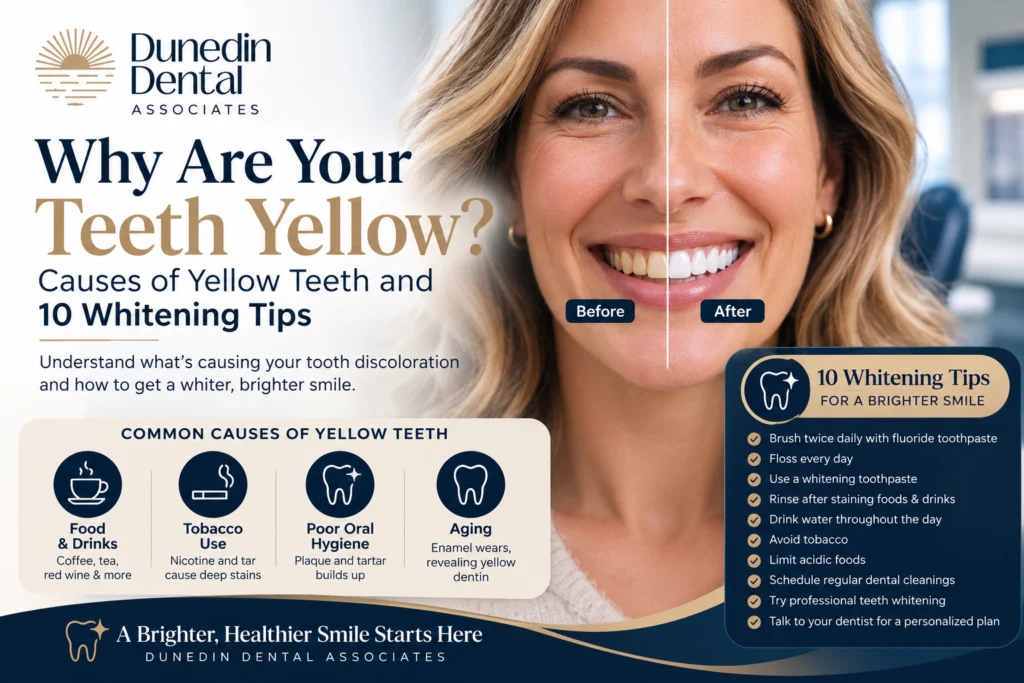
If you’ve noticed your teeth looking more yellow lately, you’re not alone. Yellow teeth are one of the most common dental concerns patients bring to Dr. Burton Dunedin Dental Associates. The good news is that most causes of yellow teeth are treatable, and understanding what’s causing your discoloration is the first step toward a whiter, brighter smile.
This guide covers the most common causes of yellow teeth and practical whitening tips for each one, written from the clinical perspective of dentists who treat tooth discoloration every day in Dunedin and Palm Harbor.
What Causes Yellow Teeth? Understanding Tooth Discoloration
Before diving into specific causes, it helps to understand how tooth discoloration actually works. Your teeth have two main layers that affect their color:
Enamel is the hard, outer protective layer of your tooth. Healthy tooth enamel is actually slightly translucent, not pure white. When staining substances contact your teeth, they can discolor this outer layer and make teeth look yellow or stained.
Dentin is the layer beneath your enamel. Dentin is naturally yellow in color. As enamel wears down over time, more of this yellow dentin shows through, making teeth appear darker or more yellow than they once did.
Understanding which layer is causing your discoloration helps determine the most effective whitening approach.
Types of Tooth Discoloration: Extrinsic vs. Intrinsic Stains
Not all yellow teeth stains are the same. Dentists classify tooth discoloration into two main categories:
Extrinsic Discoloration: These are surface stains that affect the outer layers of your teeth. Everyday surface discoloration from food, drink, and tobacco falls into this category. These stains sit on or just below the enamel surface and are generally the easiest to treat with whitening toothpaste, professional teeth whitening, or other whitening treatments.
Intrinsic Discoloration: These stains develop inside the tooth structure itself. Intrinsic tooth discoloration is harder to treat and may require more advanced cosmetic dentistry solutions. Causes of intrinsic discoloration include certain antibiotics, dental trauma, and conditions affecting developing teeth.
Knowing which type you have helps determine whether whitening strips and whitening toothpaste will be enough, or whether professional intervention is needed.
10 Common Causes of Yellow Teeth or Stain Teeth
1. Food and Drink
The most common cause of yellow teeth is what you eat and drink every day. Certain foods and beverages contain chromogens, compounds that bind to tooth enamel and cause staining. Tannins found in tea, coffee, and red wine make it easier for these compounds to stick to teeth.
Foods and drinks that stain teeth include:
- Coffee and tea
- Red wine
- Dark sodas and sports drinks
- Tomato-based sauces
- Berries and dark fruits
- Soy sauce and other dark condiments
Whitening Tip: Rinse your mouth with water immediately after consuming staining foods or drinks. Use a straw to minimize contact with your teeth. Brush your teeth 30 minutes after consuming acidic foods. Consider professional teeth whitening to remove existing stains affecting the appearance of your teeth.
2. Tobacco Use
Whether smoked or chewed, tobacco is one of the most aggressive causes of tooth discoloration. Nicotine and tar found in tobacco products cause particularly stubborn yellow or brown stains on teeth that penetrate deep into enamel over time.
Smoking causes stains that affect the outer surface of teeth and can eventually penetrate into deeper layers, making them increasingly difficult to remove. Chewing tobacco creates direct contact with your teeth and gums, causing concentrated brown stains in specific areas.
Whitening Tip: Quitting tobacco is the single most effective way to prevent further yellowing and allow whitening treatments to work. Once you stop, professional teeth whitening can significantly improve the color of your teeth. Over-the-counter whitening strips may help with mild tobacco stains, but heavy staining often requires professional dental treatment.
3. Poor Oral Hygiene
When you don’t brush and floss consistently, plaque builds up on tooth surfaces. Plaque is a sticky film of bacteria that forms on teeth, and over time it hardens into tartar or dental calculus. Both plaque and tartar cause teeth to look yellow and can lead to more serious dental issues including tooth decay and periodontal disease.
Poor oral hygiene allows staining substances more opportunity to penetrate enamel and discolor teeth. It also contributes to gum problems that can affect the overall appearance of your teeth and gums.
Whitening Tip: Brush your teeth twice daily for two full minutes with fluoride toothpaste. Floss daily to remove plaque between teeth where your toothbrush can’t reach. Use whitening toothpaste to help remove surface stains through regular brushing. Schedule professional dental cleanings every six months to remove tartar buildup that brushing can’t address.
4. Aging and Natural Enamel Wear
One cause of yellow teeth that surprises many patients is simply getting older. Aging is a natural part of life, and teeth changes over time are normal. As part of the aging process, tooth enamel naturally thins and wears away, revealing more of the naturally yellow dentin beneath.
This process accelerates if you consume acidic foods and drinks regularly, grind your teeth, or have had significant wear from teeth over time. Age-related tooth discoloration often appears as a more uniform yellowing of all teeth rather than isolated stains.
Whitening Tip: While you can’t stop aging, you can slow enamel erosion. Avoid acidic foods and drinks when possible, use a fluoride toothpaste to strengthen enamel, and wear a night guard if you grind your teeth. Professional teeth whitening Dunedin can effectively address age-related discoloration and restore a more youthful tooth color.
5. Certain Medications
Several commonly prescribed medications can cause tooth discoloration as a side effect. This is a less commonly known cause of yellow teeth that affects patients of all ages.
Medications that can yellow teeth include:
- Tetracycline and doxycycline antibiotics: These antibiotics can cause significant discoloration when taken during tooth development in children, resulting in gray or brown banding across adult teeth.
- Antihistamines: Common allergy medications including some antihistamine varieties can contribute to tooth staining.
- Drugs for high blood pressure: Certain high blood pressure medications are associated with tooth discoloration.
- Antipsychotic medications: Some psychiatric medications can affect tooth color over time.
Whitening Tip: If your discoloration is medication-related, standard whitening treatments may have limited effectiveness. Tetracycline staining in particular can be resistant to whitening. Talk to Dr. Burton or Dr. Spencer about specialized treatment options including dental veneers, which can provide significant improvement for medication-caused discoloration.
6. Fluoride Overexposure (Fluorosis)
Fluoride is essential for healthy teeth, but too much fluoride during the years when adult teeth are developing can cause dental fluorosis. This condition creates white spots or streaks, and in more severe cases, brown or yellow marks on the teeth.
Fluorosis from excessive fluoride exposure occurs during childhood when permanent teeth are forming beneath the gums. It’s worth noting that fluorosis is a developmental condition, not an ongoing problem once teeth have emerged.
Whitening Tip: Mild fluorosis responds reasonably well to professional whitening treatments. More significant fluorosis may require treatments like dental bonding, veneers, or microabrasion. A dental professional can assess your specific situation and recommend the most appropriate treatment for this type of tooth discoloration.
7. Genetics
Sometimes teeth are yellow simply because of genetics. The natural color of your teeth is largely inherited, and some people naturally have more yellow or slightly yellow teeth due to the thickness of their enamel or the shade of their dentin. Teeth that are naturally more yellow aren’t necessarily unhealthy.
If you notice your teeth look similar to a parent’s or sibling’s, genetics may be a contributing factor to your tooth color.
Whitening Tip: Genetics-related yellowing responds well to professional teeth whitening treatments. In-office whitening can typically lighten teeth by several shades regardless of natural baseline color. Consistent maintenance with whitening toothpaste and periodic touch-up treatments can help keep teeth looking their best.
8. Dental Trauma
When one or more teeth sustain injury or trauma, the affected tooth may darken or become discolored. This happens because dental trauma can damage the blood vessels inside the tooth, causing internal bleeding that stains the dentin from the inside out.
Traumatic tooth discoloration typically causes one tooth to become significantly darker than surrounding teeth, creating a noticeable difference in tooth color that may develop gradually over weeks or months after the injury.
Whitening Tip: External whitening treatments are unlikely to effectively address trauma-related discoloration because the staining comes from inside the tooth. A dentist may recommend internal bleaching, a root canal treatment followed by whitening from inside the tooth, or a dental crown to restore the appearance of the affected tooth.
9. Medical Conditions and Treatments
Certain medical conditions and treatments can cause tooth discoloration as a side effect. Cancer treatments including chemotherapy and radiation therapy to the head and neck can affect developing teeth and cause discoloration.
Conditions affecting enamel development can cause teeth to appear pale yellow, white, or brown depending on the specific condition. Liver disease and some other systemic conditions may also affect tooth color.
Whitening Tip: Medical condition-related discoloration requires evaluation by a dental professional before attempting any whitening treatment. Some conditions may require specialized treatments beyond standard whitening options. Always disclose your medical history and current medications to your dentist before beginning any whitening treatment.
10. Dry Mouth
Saliva plays a crucial role in oral health by washing away food particles and bacteria that cause staining and tooth decay. When you have chronic dry mouth, reduced saliva flow allows staining substances to maintain longer contact with your teeth and also allows more plaque to accumulate.
Dry mouth can result from certain medications, medical conditions, mouth breathing during sleep, or dehydration. Over time, reduced saliva flow contributes to discoloration and can accelerate other causes of tooth discoloration.
Whitening Tip: Address the underlying cause of dry mouth with help from your dentist or physician. Stay well hydrated, use saliva-stimulating products if recommended, and rinse your mouth to remove plaque and staining substances more frequently throughout the day. Professional cleaning and whitening can help address any discoloration that has already developed.
How Dentists Diagnose and Treat Yellow Teeth
When patients visit DDA Dental in Dunedin concerned about yellow or discolored teeth, Dr. Burton and Dr. Spencer conduct a thorough evaluation to determine the specific cause of discoloration. This matters because different causes of yellow teeth require different treatment approaches.
Diagnostic Process:
- Visual examination of tooth color, distribution of staining, and pattern of discoloration
- Review of medical history and medications
- Discussion of lifestyle habits including diet and tobacco use
- X-rays when needed to evaluate internal tooth structure
- Assessment of enamel and gum health
How Dentists Treat Yellow and Discolored Teeth
Once Dr. Burton identifies the cause of your tooth discoloration, the right treatment becomes much clearer. Not every yellow tooth needs the same fix, and using the wrong whitening method for your specific type of staining can waste time, money, or in some cases make things worse.
In-Office Professional Whitening
For surface stains from coffee, tea, red wine, or tobacco, professional in-office whitening is the gold standard. It uses prescription-strength whitening agents that are significantly stronger than anything you’ll find at a drugstore, and because it’s done under professional supervision, the concentration is carefully controlled to minimize sensitivity while maximizing results. Most patients see a noticeable difference the same day.
Custom Take-Home Whitening Trays
These are the professional alternative for patients who want flexibility. Custom trays are made specifically for your teeth, which means the whitening gel stays evenly distributed across every surface rather than bunching up or sliding around like generic strips tend to do. The results are slower than in-office whitening but still significantly better than over-the-counter products, and the custom fit makes them far more comfortable.
Whitening Strips and Over-the-Counter Products
These can work for very mild surface staining, but they come with real limitations. The one-size-fits-all design means uneven coverage, and many patients overuse them chasing results they were never going to achieve with drugstore-strength formulas. Without professional guidance, it’s easy to cause sensitivity or gum irritation without meaningfully improving your tooth color.
Dental Veneers and Bonding
When staining is intrinsic, coming from inside the tooth rather than the surface, no amount of bleaching will fully correct it. This is where veneers and bonding become the appropriate solution. They cover the visible surface of the tooth entirely, which means the color underneath becomes irrelevant. These are also the go-to options for patients whose teeth are yellow due to tetracycline antibiotics, dental trauma, or significant enamel loss.
Not every whitening method is right for every patient, and some approaches that seem harmless can actually cause real damage when used incorrectly or on the wrong type of discoloration. We’ve covered this in detail, including which methods are genuinely safe, which ones require professional oversight, and which ones carry risks most people don’t know about: Best and Safe Teeth Whitening Methods and Products
At-Home Tips to Prevent and Reduce Yellow Teeth
Alongside professional treatment, these daily habits can help prevent further yellowing and maintain whitening results:
Daily Oral Hygiene: Brush twice daily using fluoride toothpaste and a soft-bristled toothbrush. Consider using whitening toothpaste to help remove everyday surface discoloration. Floss daily and rinse your mouth regularly to remove plaque and food particles before they can stain teeth.
Dietary Adjustments: Limit your consumption of staining foods and drinks. When you do consume them, follow up with water to rinse staining compounds from tooth surfaces. Consider drinking staining beverages through a straw to minimize contact with your teeth.
Lifestyle Changes: Quitting tobacco is the most impactful lifestyle change for improving tooth color. Staying well hydrated supports healthy saliva production, which naturally protects teeth from staining.
Regular Professional Care: Schedule dental cleanings every six months to remove tartar buildup and surface stains that daily brushing can’t address. Ask about professional whitening options at your next visit to keep teeth healthy and maintain a bright smile.
Frequently Asked Questions About Yellow Teeth
Are yellow teeth always unhealthy?
Not necessarily. Some people naturally have slightly yellow teeth due to genetics or the natural color of their dentin. However, yellow teeth can sometimes indicate poor oral hygiene, enamel erosion, or other dental issues worth addressing. A dental evaluation helps determine whether your discoloration is cosmetic or a sign of an underlying problem.
Can yellow teeth become white again?
In most cases, yes. Extrinsic stains from food, drink, and tobacco typically respond well to professional whitening treatments. Intrinsic staining from medications or dental trauma may require specialized treatments. Even significantly discolored teeth can usually be improved significantly with the right approach.
Why is only one of my teeth discolored?
When a single tooth becomes yellow or dark, it often indicates dental trauma, a failing dental restoration, or the beginning of tooth decay. This situation warrants prompt evaluation by a dentist rather than attempting to address it with whitening products.
How long does whitening last?
Professional in-office whitening typically lasts 12-24 months with good oral hygiene and dietary awareness. At-home whitening results vary. Regular touch-up treatments and consistent oral hygiene help maintain results as long as possible.
Does whitening damage enamel?
Professional teeth whitening performed under dental supervision does not damage healthy tooth enamel. Overuse of whitening products without professional guidance can contribute to sensitivity and enamel issues, which is another reason professional supervision matters.
Ready to Whiten Your Teeth in Dunedin?
Understanding the cause of your yellow teeth is the first step toward an effective solution. Whether your discoloration comes from daily habits, aging, medications, or other factors, Dr. Burton and Dr. Spencer at DDA Dental have the experience and tools to help you achieve noticeably whiter teeth.
Serving patients throughout Dunedin, Palm Harbor, and the greater Tampa Bay area, our team provides comprehensive evaluation and personalized treatment plans that address your specific cause of tooth discoloration.
Contact DDA Dental today to schedule a consultation and take the first step toward healthier, whiter teeth that restore your confidence and complement your smile.