
Wait at least 48 hours after teeth whitening before returning to your normal diet. Your newly whitened teeth are most vulnerable to stain during the first 24 to 48 hours when enamel pores remain open and sensitive.
After investing in teeth whitening treatment of cosmetic dentistry, the last thing you want is to accidentally stain your newly brightened smile with the wrong food or drink.
Dr. Burton and Dr. Spencer at DDA Dental realize that knowing when and what you can eat after tooth whitening is an important piece of keeping your tooth white and protecting your investment in a brighter smile.
The inquiry “how long after whitening teeth can i eat normally” is one of the most common questions posed by patients after their whitening treatment. The response is contingent upon several factors including the whitening procedure you received, your response to healing, and what food you actually want to eat.
Protecting Your Newly Whitened Teeth: The Enamel Science Explained
Realizing why you need to change your diet after whitening your teeth will help you appreciate why the post-whitening guidelines are necessary. During any whitening procedure (whether professional dental whitening or at-home whitening treatments), the bleaching agents cause your enamel pores to open temporarily.
According to Our Dentists , during this process, we make your teeth more porous for 48 hours- Essentially when enamel is porous it can absorb everything it comes into contact with including pigments in foods and beverages, so staining can happen instantly and will reverse your whitening results there-and-then.
The dental research shows that tooth enamel gradually closes these pores over time, typically requiring 24 to 48 hours to return to its normal protective state. This is why most cosmetic dental professionals recommend waiting this critical period before resuming normal eating habits.
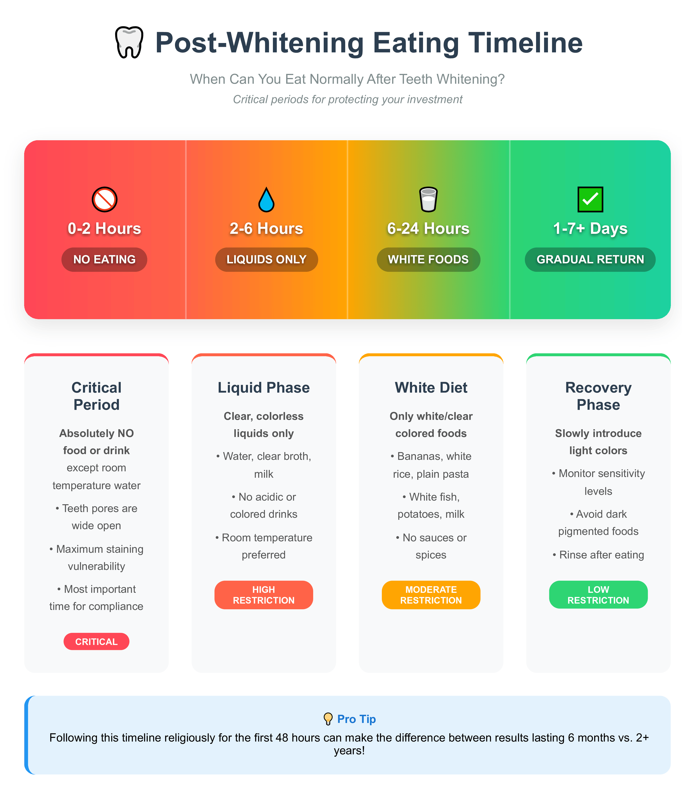
Timeline: When You Can Eat Normally After Teeth Whitening
The timeline for resuming normal eating after tooth whitening varies based on the whitening method used and individual factors affecting your oral health.
Immediate Post-Treatment (0-2 Hours): During the first two hours after your whitening procedure, it’s recommended to avoid any food or drink except water. Your teeth are at their most vulnerable state, and the whitening process may still be active depending on the treatment method used.
First 24 Hours: The initial 24 hours require the strictest dietary restrictions. During this period, stick to white foods and clear beverages to give your teeth time to begin the healing process. Many patients can start introducing some non-staining foods after this initial period, but caution is still essential.
24 to 48 Hours: Most dental professionals recommend maintaining modified eating habits for the full 48 hours following teeth whitening treatment. After this period, you can gradually return to your normal diet, though some precautions should continue for optimal results.
48 Hours and Beyond: After 48 hours, you can generally eat normally after teeth whitening, though maintaining good oral hygiene and being mindful of heavily pigmented foods will help keep your teeth looking their best long-term.
Different Whitening Methods and Their Specific Requirements
The type of teeth whitening procedure you receive affects how long you should wait before eating normally and what specific restrictions apply.
Professional Teeth Whitening: In-office professional teeth whitening treatments typically require the longest recovery period due to the strength of the bleaching agents used. These whitening treatments often necessitate waiting the full 48 hours before resuming normal eating habits. Dr. Burton notes that professional procedures achieve more dramatic results but also create more temporary sensitivity.
At-Home Dental Whitening Kits: Commercial whitening kits and dentist-prescribed take-home treatments generally have slightly less stringent requirements, but the basic 48-hour rule still applies. The concentration of bleaching agents in these whitening products is typically lower, but your teeth still become porous and vulnerable to stain.
Whitening Toothpaste and Over-the-Counter Products: While these gentler whitening products may not require complete dietary restrictions, it’s still wise to avoid strongly pigmented foods and beverages for at least 24 hours to maximize results and prevent immediate staining.
Foods and Drinks to Avoid After Teeth Whitening
Knowing which specific foods to avoid after teeth whitening treatment is crucial for protecting your investment and maintaining your bright smile. The following categories of foods and beverages pose the highest risk of staining your newly whitened teeth.
Beverages to Avoid: Coffee, tea, red wine, and dark sodas top the list of beverages that can stain teeth. These drinks contain high levels of chromogens and tannins that easily penetrate porous enamel. If you must consume these beverages, use a straw to minimize contact with your teeth and rinse your mouth with water immediately afterward.
Cola and other dark soft drinks should also be avoided during the first 48 hours. Even beverages like orange juice and other acidic drinks can be problematic, as acidic foods and drinks can further open enamel pores and increase staining risk.
Foods That Stain: Heavily pigmented foods pose significant risks to newly whitened teeth. Tomato sauce and soy sauce are particularly problematic due to their deep colors and acidic nature. Berries, including blueberries, blackberries, and strawberries, can quickly stain porous enamel despite their nutritional benefits.
Curry, turmeric, and other deeply colored spices should be avoided, as should chocolate and foods containing artificial food coloring. Even seemingly innocent foods like balsamic vinegar can cause staining when teeth are in their vulnerable post-whitening state.
Acidic Foods: Citrus fruits, tomatoes, and vinegar-based foods don’t just risk staining – they can actually increase your teeth’s porosity, making them more susceptible to stain from other sources. Avoid acidic foods during the critical first 48 hours to protect both your whitening results and overall oral health.
Safe Foods to Eat After Teeth Whitening
Understanding what you can safely eat helps make the post-whitening period more manageable while protecting your results.
White Foods and Light-Colored Options: During the first 48 hours, focus on white foods and light-colored options that won’t compromise your whitening results. White cheese, chicken, fish, rice, and pasta (without colored sauces) are excellent protein sources that won’t stain your teeth.
Cauliflower, white potatoes, and other light-colored vegetables provide nutrition without staining risk. Plain yogurt and milk are also safe choices that can help with any post-whitening sensitivity you might experience.
Non-Staining Beverages: Water should be your primary beverage choice during the post-whitening period. Clear broth, white wine (in moderation), and clear spirits mixed with non-staining mixers are generally acceptable after the initial 24-hour period.
If you need flavored beverages, choose light-colored options and consider using a straw to minimize contact with your teeth. Coconut water and clear sports drinks can also be acceptable alternatives.
Recommended Meal Ideas: Planning meals around safe foods helps ensure you maintain proper nutrition while protecting your whitening results. Consider grilled chicken or fish with white rice and steamed cauliflower, or pasta with white cheese sauce and light-colored vegetables.
Managing Sensitivity and Discomfort
Many patients experience some degree of tooth sensitivity following whitening procedures, which can affect their eating habits beyond just staining concerns.
Temperature Considerations: Avoid extremely hot or cold foods and beverages during the first 48 hours, as temperature sensitivity is common after teeth whitening. Room temperature or slightly warm foods are generally more comfortable and won’t aggravate sensitive teeth.
Gentle Foods for Sensitive Teeth: If you’re experiencing sensitivity, focus on soft, non-acidic foods that won’t cause discomfort. Bananas, soft cheese, and lukewarm soup can provide nutrition without aggravating sensitive teeth.
Pain Management: Over-the-counter pain relievers can help manage any discomfort, but consult with your dentist if sensitivity persists beyond a few days. Some patients benefit from using desensitizing toothpaste before and after their whitening procedure.
Also Read for More Detail: Does Teeth Whiten hurt or Painful?
Strategies for Unavoidable Social Situations
Sometimes life doesn’t cooperate with post-whitening dietary restrictions, and you may find yourself in situations where avoiding certain foods is difficult.
Damage Control Techniques: If you must consume potentially staining foods or beverages during the critical 48-hour period, take immediate action to minimize damage. Rinse your mouth with water immediately after eating or drinking anything that could stain.
Use a straw when possible to minimize contact with your teeth, and consider brushing your teeth gently about 30 minutes after consuming staining substances. Waiting 30 minutes allows your enamel to reharden slightly before brushing.
Social Event Navigation: When attending social events during your post-whitening period, focus on safe food options available and don’t hesitate to explain your situation to hosts. Most people understand the desire to protect a dental investment.
Consider eating a light meal of safe foods before attending events where staining foods might be the primary options. This approach helps you maintain social connections while protecting your whitening results.
Long-Term Maintenance Tips of maintaining Teeth Whitening Results
Maintaining your brighter smile requires ongoing attention to your diet and oral hygiene habits long after the initial 48-hour restriction period.
Ongoing Dietary Considerations: Even after you can eat normally after teeth whitening, being mindful of heavily staining foods and beverages helps maintain your results longer. This doesn’t mean complete avoidance, but rather smart consumption habits.
Consider designating certain heavily staining foods as occasional treats rather than daily staples. When you do consume them, follow good oral hygiene practices to minimize their impact on your teeth.
Oral Hygiene for Whitening Maintenance: Brush your teeth twice daily with whitening toothpaste to help maintain your results. However, avoid brushing immediately after consuming acidic foods, as this can damage softened enamel.
Use dental floss daily to remove plaque and food particles that could contribute to staining. Regular use of an antibacterial mouthwash can also help maintain oral health and prevent staining from bacterial buildup.
Professional Maintenance: Schedule regular cleanings with your dentist to remove surface stains and maintain your oral health. Professional cleanings every six months help keep your teeth looking their brightest and can extend the life of your whitening results.
Discuss touch-up whitening treatments with Dr. Burton or Dr. Spencer to maintain your desired level of brightness. Many patients benefit from periodic professional touch-ups or at-home maintenance treatments.
Once you’ve passed the post-whitening window, here’s how to help keep your teeth looking their best:
- Brush your teeth twice daily with whitening toothpaste.
- Rinse your mouth with water after eating staining foods or beverages like coffee, red wine, or curry.
- Use a straw with pigmented drinks.
- Maintain oral hygiene with regular dental floss and professional cleanings.
- Schedule touch-ups with your dentist for long-lasting results.
Special Considerations for Different Lifestyles
Your lifestyle and dietary preferences may require specific adaptations to post-whitening care.
Coffee and Tea Lovers: If coffee or tea is essential to your daily routine, consider switching to lighter varieties during the restriction period. White tea or very light coffee with milk might be acceptable after the first 24 hours, especially when consumed through a straw.
Consider this an opportunity to explore new beverages or reduce your caffeine intake temporarily. Many patients find they can gradually reintroduce these beverages after 48 hours with proper precautions.
Wine Enthusiasts: Red wine is one of the most problematic beverages for newly whitened teeth due to its high tannin content and deep color. If wine consumption is important for business or social reasons, consider switching to white wine temporarily or avoiding wine altogether during the critical period.
When you do resume red wine consumption, follow it immediately with water to rinse away residue, and avoid swishing the wine around your mouth.
Busy Professionals: If your work schedule makes meal planning difficult, prepare safe foods in advance and keep emergency snacks available. Hard-boiled eggs, white cheese, and light-colored fruits like pears or green grapes can provide quick nutrition without staining risk.
Common Mistakes to Avoid
Understanding common post-whitening mistakes helps ensure you get the best possible results from your treatment.
Timing Errors: Don’t assume you can eat normally immediately after your whitening procedure ends. The 48-hour rule exists for important biological reasons, and rushing back to normal eating habits can significantly compromise your results.
Similarly, don’t extend restrictions unnecessarily beyond what your dental professional recommends. Over-restricting your diet can lead to nutritional deficiencies without providing additional benefits.
Inadequate Preparation: Failing to plan appropriate foods for the post-whitening period often leads to poor choices when hunger strikes. Stock your kitchen with safe foods before your whitening appointment to avoid temptation.
Ignoring Sensitivity Signals: If your teeth feel sensitive, don’t push through discomfort by eating challenging foods. Sensitivity is your body’s way of signaling that your teeth need gentle care during the healing process.
When to Contact Your Dentist in Dunedin
Certain situations warrant professional guidance during your post-whitening recovery period.
Persistent Sensitivity: While mild sensitivity is normal after teeth whitening, severe or prolonged discomfort may indicate a problem. Contact Dr. Burton or Dr. Spencer if sensitivity persists beyond a few days or interferes with normal eating.
Unexpected Staining: If you notice staining despite following post-whitening guidelines, professional evaluation can help determine whether the staining is temporary or requires additional treatment.
Questions About Specific Foods: When in doubt about whether a particular food is safe during your recovery period, don’t hesitate to contact your dental team for guidance. It’s better to ask than risk compromising your results.
The Investment Perspective
Teeth whitening represents a significant investment in your appearance and confidence, making post-treatment care crucial for maximizing your return on investment.
Cost of Maintenance vs. Retreat: Following proper post-whitening dietary guidelines costs nothing but can significantly extend the life of your results. Failing to follow these guidelines often necessitates more frequent touch-up treatments, increasing your long-term costs.
Professional vs. DIY Results: Professional whitening treatments typically provide more dramatic and longer-lasting results than over-the-counter options, but they also require more careful post-treatment care to achieve their full potential.
Building Healthy Long-Term Habits
Use your post-whitening period as an opportunity to develop healthier eating and oral hygiene habits that will benefit you long-term.
Mindful Eating: Paying attention to how different foods affect your teeth during the post-whitening period can help you develop more tooth-friendly eating habits permanently.
Improved Oral Hygiene: The increased attention to oral care during your recovery period often leads to better long-term oral hygiene habits, benefiting your overall dental health beyond just maintaining whitening results.
Conclusion: Protecting Your Investment
Successfully navigating the post-whitening dietary period requires planning, patience, and commitment to following professional guidelines. While the 48-hour restriction period may seem challenging, it’s a small price to pay for maintaining the bright, confident smile you’ve invested in achieving.
Remember that every person’s experience with teeth whitening is unique, and your specific timeline may vary based on individual factors. When in doubt, consult with Dr. Burton and Dr. Spencer at DDA Dental for personalized guidance tailored to your specific situation and whitening method.
The temporary dietary modifications required after teeth whitening are a worthwhile investment in maintaining your beautiful results. By following these guidelines carefully, you can enjoy your brighter smile for months or even years to come, making your whitening treatment a success that enhances both your appearance and your confidence.
Whether you’re planning your first professional whitening treatment or seeking guidance after a recent procedure, remember that proper post-treatment care is just as important as the whitening process itself. With careful attention to timing, food choices, and oral hygiene, you can maximize your whitening results and enjoy the confident smile you deserve.
Frequently Asked Questions About Eating After Teeth Whitening
How long do you wait to eat after whitening your teeth?
Wait at least 48 hours after teeth whitening before returning to your normal diet. During the first 2 hours, avoid all foods and beverages except water. The first 24 to 48 hours are most critical for protecting your whitening results.
How long after crest teeth whitening can i eat normally?
Crest whitening strips and other at-home whitening products typically require the same 48-hour waiting period as professional treatments. While these whitening treatments may be gentler, your teeth still become porous and vulnerable to stain during this critical period.
How long after laser teeth whitening can i eat normally?
Laser teeth whitening, like other professional whitening treatments, requires waiting at least 48 hours before resuming your normal diet. The laser activation process may actually make teeth more sensitive initially, so following dietary restrictions is especially important.
How soon after teeth whitening can i eat normally?
You can typically eat normally 48 hours after your teeth whitening procedure, though some people may be able to return to normal eating habits after 24 hours with very gentle whitening treatments. Never rush this timeline, as premature exposure to staining foods can compromise your results.
How long after teeth cleaning can i eat normally?
Regular dental cleanings don’t typically require dietary restrictions, and you can eat normally immediately afterward. However, if you received whitening treatment during your cleaning appointment, follow the standard 48-hour guidelines for post-whitening care.
How long after zoom teeth whitening can i eat normally?
Zoom whitening is a professional in-office treatment that requires waiting the full 48 hours before eating normally. This popular whitening procedure uses strong bleaching agents that make teeth particularly vulnerable to stain during the recovery period
Are There Specific Oral Hygiene Practices to Follow?
Yes, maintaining excellent oral hygiene after teeth whitening is crucial. Brush your teeth gently with fluoride toothpaste twice daily, but wait at least 30 minutes after consuming acidic foods or beverages before brushing. Use dental floss daily and rinse your mouth with water after meals to help maintain your bright smile and overall oral health.
Can I Drink Coffee After Teeth Whitening?
Coffee is one of the beverages you should avoid for at least 48 hours after teeth whitening. Coffee contains tannins that can quickly stain porous enamel. When you do resume drinking coffee, consider using a straw to minimize contact with your teeth and rinse your mouth with water afterward to help keep your teeth white and protect your whitening investment.