
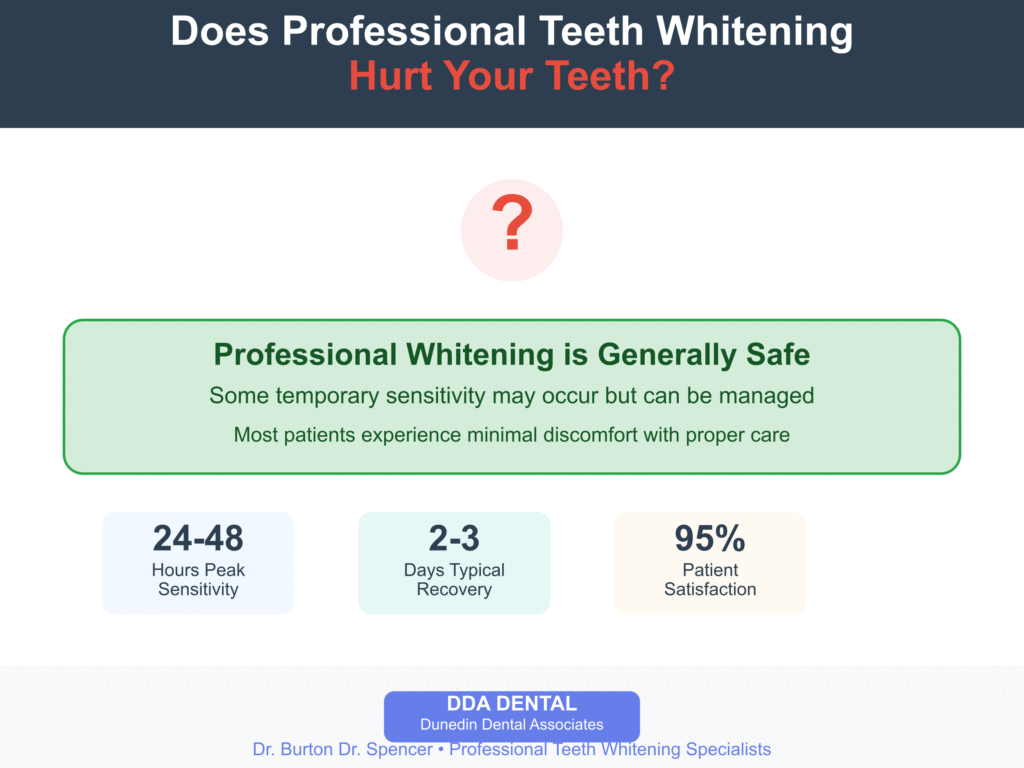
Professional teeth whitening is a popular cosmetic dental procedure aimed at achieving a brighter smile. Many individuals considering this teeth whitening treatment often wonder, “Does professional teeth whitening hurt your teeth?” and it’s answer is quite Simple “Professional teeth whitening does not hurt or damage your teeth when done by a dentist. Some patients may experience temporary tooth sensitivity or mild gum irritation, but these effects are short-term and manageable. The whitening agents only affect stains on the enamel and do not harm the tooth structure.
With proper care and professional supervision, teeth whitening is a safe and effective way to achieve a brighter smile. Understanding the potential for tooth sensitivity and the factors contributing to it is crucial before undergoing any whitening procedure.
Dr. Matthew Burton and Dr. Spencer at DDA Dental in Dunedin have helped hundreds of patients achieve whiter teeth while minimizing discomfort. Based on their experience serving Palm Harbor and the greater Tampa Bay area, here’s what you need to know about professional teeth whitening and tooth sensitivity.
Understanding Tooth Sensitivity During Whitening
Tooth sensitivity is a common concern associated with teeth whitening. The whitening process involves the use of a whitening agent, typically hydrogen peroxide, to break down stains on the tooth enamel. While effective in whitening teeth, this process can sometimes lead to temporary tooth sensitivity.
Sensitivity after teeth whitening varies from person to person, with some experiencing minimal discomfort and others feeling more noticeable tooth pain. The good news is that when professional teeth whitening treatments are performed by experienced dental professionals like those at DDA Dental, sensitivity can be minimized and managed effectively.
What Causes Tooth Sensitivity During Whitening?
Increased tooth sensitivity following a teeth whitening procedure is primarily due to the whitening agent penetrating the tooth enamel and reaching the underlying dentin. The dentin contains microscopic tubules that lead directly to the tooth’s nerve. When the whitening gel comes into contact with these tubules, it can cause temporary inflammation and irritation, resulting in tooth sensitivity.
Factors like pre-existing dental conditions, thin tooth enamel, and gum recession can increase sensitivity after whitening. This is why a thorough dental examination is essential before any whitening session.
What Are the Different Types of Teeth Whitening Methods?
When considering professional teeth whitening, it’s important to know the types of teeth whitening treatments available and their associated sensitivity levels:
In-Office Professional Whitening
This in-office treatment provided by your dentist often uses a high concentration of whitening gel and may incorporate light activation to accelerate the whitening process. While highly effective, this method may cause more initial sensitivity due to the stronger whitening agent concentration.
Professional Take at-Home Whitening Trays
Custom-fitted whitening trays provided by your dental professional, combined with a whitening product to use at home, offer more gradual results. These professional teeth whitening options provide controlled whitening results with typically less sensitivity than in-office procedures.
At-Home Whitening vs Professional Methods
Over-the-counter teeth whitening products like whitening strips and whitening kits may seem gentler, but they can actually cause more unpredictable sensitivity because they’re not customized to your specific tooth anatomy.
Laser Teeth Whitening vs. At-Home Whitening
Laser teeth whitening is an in-office treatment that uses a concentrated whitening agent activated by a laser. This method offers distinct advantages and disadvantages, particularly when compared to at-home treatments:
- Laser teeth whitening provides rapid results but may be more expensive.
- At-home whitening offers gradual whitening at a lower cost.
Ultimately, the choice depends on your budget, the desired speed of results, and your tolerance for sensitivity after whitening.
Does Laser Teeth Whitening Hurt?
Laser teeth whitening is an in-office treatment that uses a concentrated whitening agent activated by laser technology. Many patients ask whether this advanced whitening method causes more or less discomfort.
In our experience at DDA Dunedin Dental, laser teeth whitening often causes less sensitivity than traditional methods because:
- The laser activation allows for shorter treatment times
- Less whitening gel contact time with teeth and gums
- More precise application reduces gum irritation
- Professional supervision allows for immediate adjustments
However, individual responses to laser teeth whitening vary, and some tooth sensitivity may still occur regardless of the whitening method used.
What to Expect During Professional Teeth Whitening Treatment
Understanding what happens during your teeth whitening session helps prepare you for any potential sensitivity:
Pre-Treatment Assessment: Your dentist will evaluate your teeth and gums to identify factors that might increase sensitivity. This includes checking for existing dental issues, enamel thickness, and any signs of gum recession.
Protection and Preparation: Professional treatments include protective measures to minimize tooth sensitivity or gum irritation. Gum barriers and careful gel application are standard procedures that aren’t available with at-home whitening.
Monitoring Throughout Treatment: During your whitening procedure, your dental professional monitors your comfort level and can adjust the treatment if sensitivity occurs. This professional supervision is a key advantage of in-office treatment.
Immediate Post-Treatment Care: After your whitening session, you’ll receive specific instructions for managing any temporary sensitivity and protecting your newly whitened teeth.
Common Side Effects of Professional Teeth Whitening
Many individuals undergoing a teeth whitening treatment may experience common side effects. These effects can range from mild tooth sensitivity and gum irritation to more noticeable tooth pain, though severe discomfort is uncommon with professional treatments.
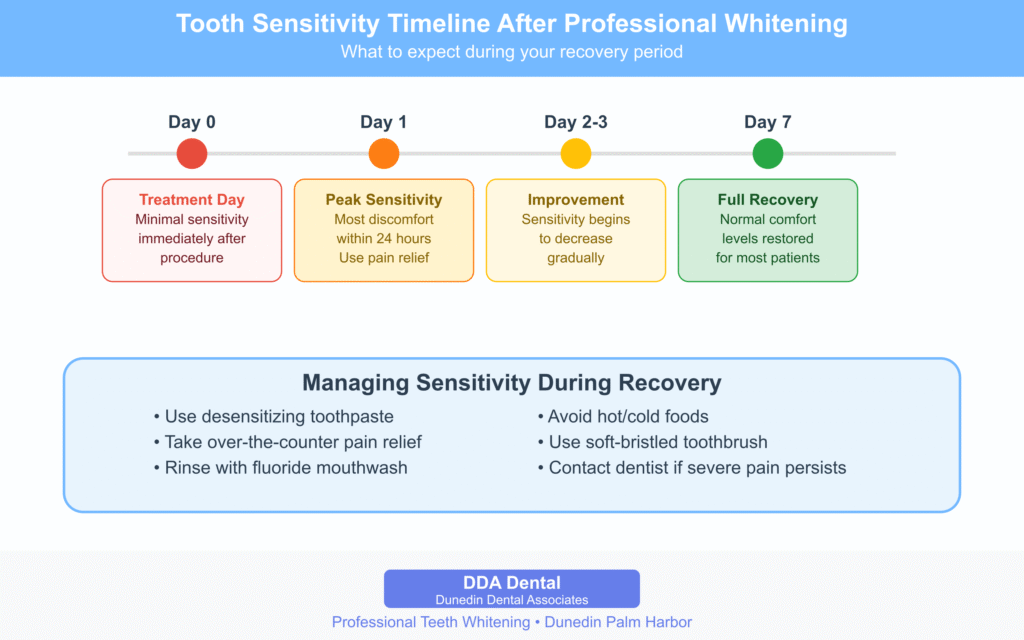
Temporary Tooth Sensitivity: The most frequent side effect is sensitivity to hot, cold, or sweet stimuli. This sensitivity after whitening typically peaks within 24 hours and gradually subsides over 2-3 days.
Mild Gum Irritation: Some patients experience minor gum irritation if whitening gel contacts soft tissues. Professional application techniques minimize this risk significantly compared to at-home whitening options.
Throat Sensitivity: Rarely, patients may experience mild throat irritation, though professional supervision makes this uncommon.
Most side effects are temporary and resolve without intervention within a few days of treatment.
Pain After Teeth Whitening: What to Expect
After undergoing a teeth whitening procedure, it’s essential to have realistic expectations regarding potential pain and discomfort. While some individuals may experience minimal sensitivity, others might feel more significant tooth pain initially.
Normal vs. Concerning Symptoms: Normal sensitivity includes mild to moderate discomfort when consuming hot or cold items. This should gradually improve over 2-3 days. Severe, persistent pain that interferes with daily activities is less common and should be reported to your dentist.
Timeline for Recovery: Most patients find that sensitivity peaks within the first 24 hours and steadily improves. Complete resolution typically occurs within one week, though many patients feel significantly better within 2-3 days.
Understanding what to expect regarding sensitivity after whitening can alleviate anxiety and help you prepare for a comfortable recovery.
Managing Tooth Sensitivity After Professional Whitening
Managing tooth sensitivity after whitening can be achieved through various methods recommended by Dr. Burton and Dr. Spencer:
Immediate Relief Strategies: Using a toothpaste designed for sensitive teeth helps block nerve signals and reduce tooth pain. These desensitizing products containing potassium nitrate or stannous fluoride are particularly effective.
Taking over-the-counter pain relievers like ibuprofen can provide temporary discomfort relief while reducing inflammation.
Ongoing Care Recommendations: Avoid extremely hot or cold foods and beverages for the first few days after treatment. Rinse with fluoride mouthwash to strengthen enamel and reduce sensitivity. Use a soft-bristled toothbrush to minimize gum irritation and enamel wear.
Professional Treatments: Your dentist may recommend fluoride treatments or desensitizing gel applications after your whitening session to further reduce sensitivity and strengthen tooth enamel.
Preventing Pain After Teeth Whitening in Dunedin
At DDA Dental, we use several strategies to minimize discomfort during and after professional teeth whitening treatments for our Dunedin and Palm Harbor patients:
Pre-Treatment Preparation:
- Comprehensive examination to identify sensitivity risk factors
- Treatment of any existing dental issues before whitening
- Discussion of your sensitivity history and concerns
- Pre-treatment desensitizing protocols when appropriate
Professional Application Techniques:
- Precise whitening gel application to avoid gum contact
- Use of protective barriers for sensitive areas
- Careful monitoring throughout the teeth whitening treatment
- Adjustment of whitening agent concentration based on your response
Post-Treatment Support:
- Detailed aftercare instructions for managing sensitivity
- Access to professional guidance if complications arise
- Follow-up care to ensure proper healing
When to Consult Your Dentist About Whitening Pain
Knowing when to consult your dentist is vital for proper dental care and peace of mind. While some sensitivity after teeth whitening is normal, certain symptoms warrant professional attention:
Contact Your Dentist If:
- Sensitivity persists beyond one week
- Pain becomes severe or interferes with daily activities
- Signs of gum irritation don’t improve within a few days
- You develop unusual symptoms not discussed during your consultation
Emergency Situations: Severe, persistent pain or signs of infection require immediate dental attention. While rare with professional treatments, prompt care ensures the best outcomes.
Professional Teeth Whitening vs. At-Home Options: Safety Comparison
Understanding the safety differences between professional and at-home whitening helps explain why professional treatments often cause less problematic sensitivity:
Professional Advantages:
- Customized treatment based on your specific tooth anatomy
- Professional supervision throughout the whitening process
- Higher quality whitening agents that work more efficiently
- Immediate response to any sensitivity issues
- Protective measures not available with at-home products
At-Home Limitations:
- One-size-fits-all approach that may not suit your teeth
- No professional monitoring during treatment
- Higher risk of overuse or improper application
- Limited recourse if sensitivity becomes severe
This is why many dentists recommend starting with professional treatment to establish a baseline for your sensitivity tolerance and optimal results.
Maintaining Your Results While Managing teeth Sensitivity
Getting your teeth professionally whitened is an investment in your smile, and proper maintenance helps preserve results while managing any ongoing sensitivity:
Gentle Daily Care: Brush your teeth with fluoride toothpaste twice daily, using gentle circular motions. If you experience ongoing sensitivity, consider using whitening toothpaste formulated for sensitive teeth.
Lifestyle Considerations: Limit staining foods and beverages, especially in the first 48 hours after treatment. When consuming potentially staining substances, rinse with water afterward to minimize contact with your newly whitened teeth.
Regular Dental Care: Maintain regular dental cleanings and checkups to preserve your whitening results and monitor your overall dental health. Your dentist can recommend touch-up treatments when appropriate.
The Bottom Line: Safe Whitening in Dunedin
Professional teeth whitening, when performed by qualified dental professionals, is a safe and effective way to achieve a brighter smile. While some temporary tooth sensitivity may occur, proper technique and aftercare minimize discomfort and maximize results.
At DDA Dental, Dr. Burton and Dr. Spencer have extensive experience helping patients achieve their whitening goals while maintaining comfort throughout the process. Their comprehensive approach to cosmetic dentistry includes detailed consultations, customized treatment plans, and ongoing support.
If you’re considering teeth whitening in Dunedin or Palm Harbor, we encourage you to schedule a consultation to discuss your goals and any sensitivity concerns. Our team can help determine whether professional teeth whitening is right for you and develop a treatment approach that prioritizes both effectiveness and comfort.
Don’t let worries about sensitivity prevent you from achieving the white smile you want. With proper professional care and realistic expectations, teeth whitening can be a comfortable, rewarding experience that enhances your confidence for years to come. Contact our dental services team today to learn more about safe, effective whitening options.