
Some dental emergencies require immediate attention to prevent permanent damage, save teeth, and avoid life-threatening complications. Knowing which situations can’t wait and what to do in the first crucial minutes can make all the difference between saving your tooth and losing it forever.
Recent 2025 statistics reveal that around 200,000 people visit emergency departments yearly in the U.S. due to dental abscesses or severe dental infections, accounting for 25% of all emergency room visits related to oral health issues. This alarming trend underscores the critical importance of recognizing when dental problems become true dental emergencies requiring immediate care.
When dental emergencies arise, every minute counts! Our Dentists at DDA Dental Emergency Dentist Palm Harbor have witnessed first-hand how timely intervention can mean the difference in the mouth being repaired or reconstructed. As dentists involved in emergency care for large numbers of patients in Dunedin, we have narrowed down the many scenarios to nine dental emergencies that should be addressed right away, knowing emergencies include anything that threatens dental health is a time matter, one that can save your tooth.
What Makes a Dental Emergency Critical?
Most dental issues don’t really fall under the definition of an emergency situation, but some dental conditions, if not addressed properly, can potentially lead to permanent tooth loss, serious infection, or even life-threatening complications. The American Dental Association describes dental emergencies as potentially life-threatening diagnoses that require immediate treatment for the patient to stop active bleeding, resolve infection and/or alleviate severe pain.
Dr. Spencer says a dental emergency can happen to anyone, anywhere and usually at the worst possible time. Knowing how to respond to a dental emergency may help avoid complications and improve treatment outcomes for some of the more common dental emergencies.
Common types of dental emergencies that require immediate care usually involve more severe pain, active bleeding, trauma/physical injury, or the trend of spreading infection. Any of these situations would classify as a dental emergency where immediate dental care is required to prevent irreversible damage and/or potential life-threatening complications.
9 Dental Emergency types those need emergency dentist visit
1. Knocked-Out Tooth (Tooth Avulsion)
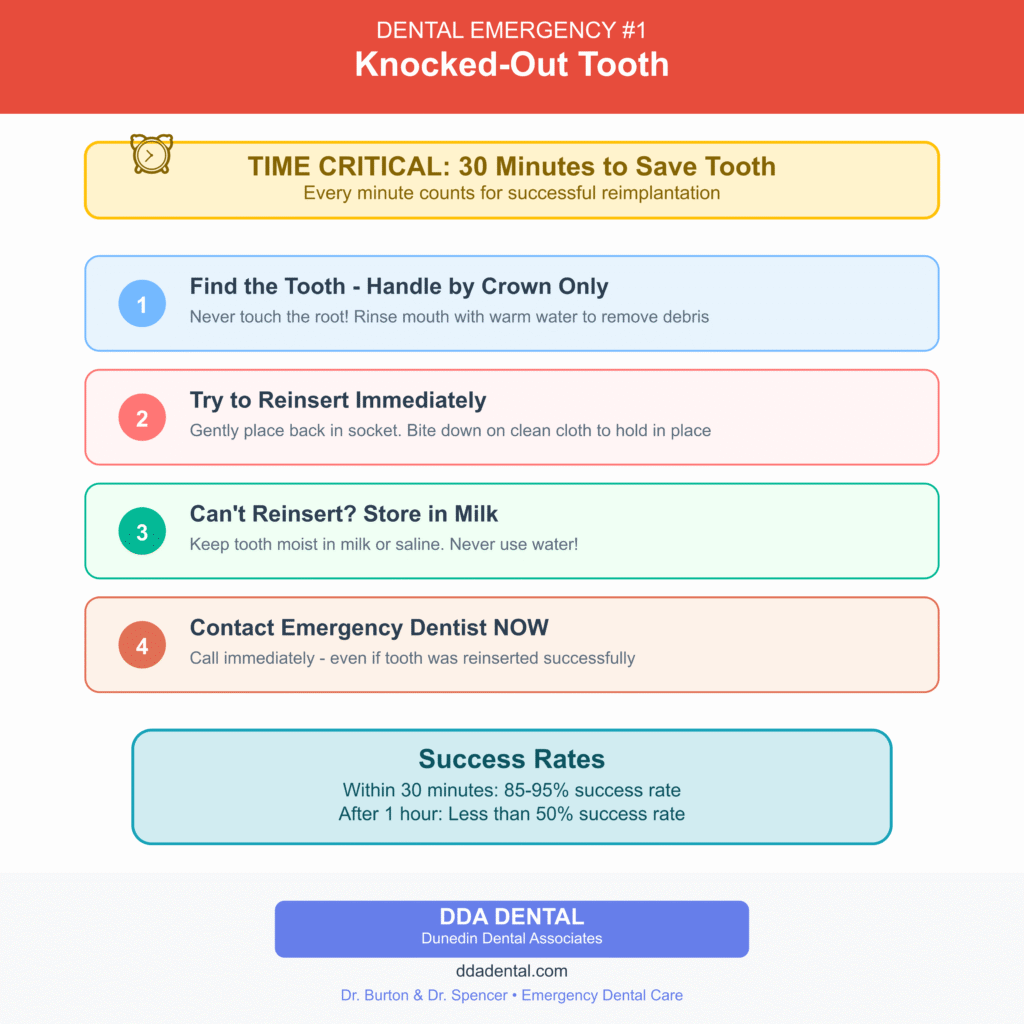
A completely knocked-out tooth represents one of the most time-sensitive dental emergencies. The chance of saving the tooth decreases dramatically with each passing minute, making immediate action crucial for successful tooth preservation.
What to do immediately:
First, locate the tooth and handle it carefully, avoiding touching the root surface. Rinse your mouth with warm water to remove any blood or debris. If the tooth is dirty, gently rinse it with warm water or milk, but never scrub the tooth structure.
Try to reinsert the tooth back into its socket if possible. Hold it in place by gently biting down on a clean cloth or gauze. If reinsertion isn’t possible, store it in milk to preserve the tooth’s vital cells. Never store knocked-out teeth in water, as this can damage the root cells needed for successful reimplantation.
Time is critical – the chance of saving the tooth occurs when reimplantation happens within 30 minutes. Contact an emergency dentist immediately, even if you successfully reinsert the tooth. The tooth will likely need root canal treatment and ongoing monitoring.
Why it can’t wait: After one hour, the chance of saving decreases significantly. Root surface cells die quickly when exposed to air, making prompt emergency treatment essential for tooth survival and preventing the need for a dental implant later.
2. Severe Toothache with Swelling
While minor tooth pain might be manageable until your next appointment, a severe toothache accompanied by facial swelling indicates a serious infection that requires immediate attention and emergency dental care.
Recognition signs: The pain is typically constant, throbbing, and unresponsive to over-the-counter drug treatments like aspirin or standard pain relievers. Swelling may affect your face, jaw, or neck area. You might also experience fever, difficulty swallowing, or a general feeling of illness.
Immediate steps: Rinse your mouth with warm water mixed with a teaspoon of salt to remove any debris. Take ibuprofen as directed to reduce both pain and inflammation in the affected gum tissue. Apply a cold compress with ice wrapped in cloth to reduce swelling for 20 minutes at a time. Avoid applying heat, which can worsen the infection and increase swelling.
Why immediate care matters: Dental infections can spread rapidly to other parts of your body through blood vessels and tissue. What starts as tooth pain can quickly become a life-threatening condition requiring hospital emergency department care.
3. Dental Abscess
A dental abscess is a serious infection that appears as a painful, swollen bump on your gum. This represents one of the most dangerous dental emergencies because an abscess containing pus and bacteria can spread throughout your body if left untreated.
What you’ll notice: The abscess typically appears as a pimple-like bump on your gum, often accompanied by severe pain, swelling, fever, and a bad taste in your mouth. The area may be extremely tender to touch, and you might notice pressure changes when you bite down.
Emergency response: Rinse your mouth with warm water and salt several times daily to help drain the abscess and reduce bacteria levels. Take over-the-counter drug medications like ibuprofen as needed for pain management, but avoid placing aspirin directly on your gum as this can cause tissue damage. Contact an emergency dentist immediately, as a dental abscess is a serious condition.
Critical timing: An untreated abscess is a serious infection that can lead to sepsis, a potentially fatal whole-body infection. The infection can also spread through tissue to your jaw, neck, brain, or other vital organs, making immediate professional treatment essential to prevent the infection from spreading.
- The Best and Safest Teeth Whitening Methods: Products, Results, and What Your Dentist Actually Recommends
- How Long Does Dental Sedation Last? Nitrous Oxide, Oral Sedation, and IV Sedation Explained
- Does Teeth Whitening Damage Your Tooth Enamel? Are Whitening Strips Safe?
- The Risks and Side Effects of Sedation Dentistry Explained : Sedation in Dentistry
- Hot and Cold Tooth Sensitivity: What’s the Difference and Tooth Sensitive Means
4. Broken Tooth with Exposed Nerve
When a tooth breaks severely enough to expose the inner nerve tissue, the intense pain and risk of infection make this a true dental emergency that requires immediate attention.
Immediate pain management: Rinse your mouth with warm water to clean the area and remove debris from around the broken tooth. If you can locate the broken piece, save it in milk and bring it to your emergency appointment. Cover the broken tooth with temporary dental cement if available from a pharmacy.
Pain control measures: Take ibuprofen for both pain relief and to reduce inflammation in the affected tissue around the tooth. Avoid extremely hot or cold foods and beverages. Don’t chew on the affected side to prevent further damage to the tooth structure.
Why timing matters: Exposed nerves are vulnerable to bacteria, leading to infection and potential tooth death. Quick treatment can often save the tooth with a crown or other dental restoration, while delayed care might require root canal treatment or extraction, possibly leading to tooth loss.
5. Uncontrolled Bleeding
Significant bleeding in your mouth, whether from trauma, recent dental extraction, or spontaneous gum bleeding, constitutes a dental emergency when it cannot be controlled with normal pressure application.
Immediate steps: Apply direct pressure using clean gauze or a clean cloth to the bleeding area around the tooth or gum. Hold firmly for 10-15 minutes without checking if bleeding has stopped. If bleeding continues, apply fresh gauze and maintain pressure while seeking emergency care.
When to seek emergency care: If bleeding doesn’t stop after 30 minutes of continuous pressure, or if you’re experiencing dizziness or weakness from blood loss, seek immediate treatment. Heavy bleeding can sometimes indicate underlying periodontal disease or gum disease requiring professional evaluation.
Additional considerations: People taking blood-thinning medication should seek professional dental care more quickly, as their bleeding may be more difficult to control. Emergency department evaluation may be necessary for severe cases.
6. Lost Filling or Crown with Pain
While a lost dental restoration isn’t always an emergency, it becomes one when accompanied by severe pain, indicating possible nerve exposure or damage to the underlying tooth structure.
Temporary measures: Clean the affected tooth gently and rinse your mouth with warm water. Temporary dental cement from a pharmacy can provide short-term protection for the exposed tooth socket area. Avoid chewing on that side and stay away from very hot or cold foods.
Pain management: Over-the-counter analgesic medications can help manage discomfort temporarily. Clove oil, available at most pharmacies, can provide temporary numbing when applied carefully to the affected tooth area.
Why prompt care matters: An unprotected tooth is vulnerable to further damage and bacterial invasion through exposed tissue. What might be a simple filling or crown replacement can quickly become a need for root canal treatment if the tooth becomes infected.
7. Chipped Teeth with Sharp Edges
Broken teeth become emergencies when they create sharp edges that cut your tongue, cheeks, or lips, or when the damage is extensive enough to cause severe pain or expose the tooth’s nerve.
Immediate care: Save any pieces of the chipped teeth if possible and store them in milk. Rinse your mouth with warm water and rinse any broken pieces. If there’s bleeding from your gum or surrounding tissue, apply gauze to the area for about 10 minutes.
Managing sharp edges: Cover sharp edges with dental wax, temporary dental cement, or even sugar-free gum to prevent injury to your soft tissue like your tongue and lips. Avoid using the damaged tooth for chewing and stick to soft foods.
Emergency indicators: Seek immediate care if you experience severe pain, if the chip exposes the tooth’s nerve, or if sharp edges are causing repeated injury to your mouth tissue. Don’t wait to see a dentist for proper evaluation.
8. Loose Crown or Bridge Causing Problems
A loose crown or bridge becomes an emergency when it causes pain, creates sharp edges, or when there’s a risk of swallowing the dental restoration.
Safe removal: If the crown is very loose and you’re at risk of swallowing it, try to remove it carefully using dental floss. Clean it with warm water and store it safely to bring to your emergency appointment.
Temporary reattachment: Use dental cement from a pharmacy or even a small amount of toothpaste to temporarily hold a crown in place until you can see a dentist. Clean both the crown and tooth with warm water before attempting reattachment.
Seeking care: Contact an emergency dentist as soon as possible, especially if you’re experiencing pain or if the underlying tooth is sensitive to temperature changes or pressure. Act quickly to prevent further complications.
9. Jaw Injury or Suspected Fracture
Trauma to the jaw from sports, accidents, or falls can result in fractures that require immediate medical and dental attention to prevent complications.
Signs of jaw injury: Difficulty opening your mouth, pain when chewing or speaking, misaligned bite pattern, numbness in your lip or chin area, or visible deformity of your jaw line. You may also notice swelling or difficulty with normal jaw movement.
Emergency response: Apply ice wrapped in cloth to reduce swelling and control pain. If you suspect a jaw fracture, you may need to visit an emergency room first for medical evaluation and X-ray imaging, then follow up with emergency dental care.
Why immediate care is crucial: Jaw fractures can affect your airway and breathing, and delays in treatment can result in permanent jaw problems, nerve damage, or complications with proper healing of the bone tissue.
What to Do Before You Reach the Dentist
While heading to receive emergency dental care, several general principles apply to most dental emergencies that can help manage your dental condition.
Pain management: Ibuprofen is often more effective than aspirin or acetaminophen for dental pain because it reduces inflammation in affected tissue. Follow package directions and don’t exceed recommended dosages as pain relievers have limits.
Protect the area: Avoid chewing on the affected side, and stay away from very hot or cold foods and beverages that might increase sensitivity or pain around the tooth. Stick to soft foods and use the unaffected side.
Gather information: Write down when the emergency occurred, what caused it, and what symptoms you’re experiencing. This information helps your emergency dentist provide better care and determine the best dental treatment approach.
Oral hygiene: Gently rinse your mouth with warm water to remove debris, but avoid vigorous swishing that might worsen bleeding. Use a soft toothbrush around unaffected areas to maintain oral health.
Understanding Emergency Dental Services
Most dental offices offer some form of emergency dental services, though availability varies. Dr. Burton and Dr. Spencer at DDA Dental prioritize emergency cases during office hours and provide guidance for after-hours emergency situations.
What emergency dental services typically include:
- Pain management and temporary stabilization
- Tooth reimplantation for knocked-out teeth
- Drainage of dental infections and abscesses
- Temporary crowns or fillings using dental cement
- Repair of fractured teeth and gums
- Treatment of dental trauma and injury
After-hours considerations: When facing a dental emergency outside dental office hours, call your dentist’s emergency number first. Many dental practices have protocols for urgent dental situations. For life-threatening emergencies involving breathing difficulties, visit an emergency room immediately.
Prevention: Reducing Your Risk of Dental Emergencies
While not all dental emergencies are preventable, many can be avoided with proper precautions and regular dental care focused on maintaining good oral health.
Protective measures:
- Wear mouthguards during sports activities to protect teeth and gums from trauma
- Avoid chewing ice, hard candy, or other hard objects that can crack teeth
- Don’t use your teeth as tools to open packages
- Address dental problems promptly before they become emergencies
- Maintain good oral hygiene through regular tooth brushing with fluoride toothpaste, use dental floss daily, and mouthwash
Regular maintenance: Many dental emergencies result from underlying conditions like tooth decay, periodontal disease, or gum disease that could have been caught during routine visits. Regular dental checkups allow for early detection before dental issues become critical emergencies.
When Emergency Rooms Can Help (And When They Can’t)
While most dental emergencies require treatment from a dentist, some situations warrant a visit to an emergency room first before seeking specialized dental care.
Go to the emergency room for:
- Uncontrolled bleeding that won’t stop with pressure
- Suspected jaw fractures requiring X-ray imaging
- Severe facial swelling affecting breathing or swallowing
- Signs of serious infection with high fever or difficulty swallowing
- Trauma involving head injury or loss of consciousness
Emergency room limitations: Most emergency rooms can provide pain medication and antibiotic treatment but cannot perform definitive dental procedures like root canal treatment, dental extraction, or crown placement. You’ll typically need follow-up care with a dentist for complete dental treatment of the underlying dental condition.
The Cost of Delaying Emergency Dental Care
Understanding the consequences of delayed treatment emphasizes why these dental emergencies can’t wait and require immediate attention.
Financial implications: What might be a simple filling today could require a crown tomorrow, or root canal treatment next week if infection develops. Emergency treatment is typically less expensive than complex procedures needed when dental problems worsen, including potential dental implant placement.
Health consequences: Dental infections can spread to other parts of your body through blood and tissue, potentially requiring hospital care and extensive medical treatment. The chance of saving decreases significantly with time, leading to tooth loss and need for replacement options.
Quality of life impact: Dental pain can be debilitating, affecting your ability to eat, sleep, work, and enjoy daily activities. Prompt treatment gets you back to normal life faster and helps prevent further complications.
How DDA Dental Handles Emergency Cases
At DDA Dental Dunedin , Dr. Burton and Dr. Spencer have developed protocols specifically for handling dental emergencies efficiently and effectively.
Our emergency approach:
- Immediate care as the first priority using appropriate medication
- Comprehensive examination to determine the full extent of damage or infection
- Same-day emergency treatment when possible to resolve the emergency
- Clear communication about dental treatment options and next steps
- Follow-up care to ensure proper healing and prevent dental complications
Emergency preparedness: We maintain emergency supplies including dental cement, gauze, and medications, and reserve time slots for urgent cases. Our team is trained to handle various types of dental emergencies, from simple repairs to complex trauma cases requiring specialized dentistry skills.
Creating Your Personal Dental Emergency Plan
Being prepared for dental emergencies can make a significant difference in outcomes when you’re experiencing a dental emergency and reduce the stress of emergency situations.
Emergency kit essentials:
- Dentist’s emergency contact information
- Over-the-counter pain medication (ibuprofen and acetaminophen)
- Temporary dental cement from a pharmacy
- Gauze and clean cloths for bleeding control
- Salt for making saline rinses with warm water
- Small container with lid for storing knocked-out teeth in milk
Family emergency plan: Make sure family members know how to handle a dental emergency. This is especially important for parents of active children who participate in sports with higher injury risk to teeth and gums.
The Bottom Line: Act Quickly, Seek Emergency Dentist Visit
Dental emergencies that can’t wait require immediate recognition and rapid response. While first aid measures can help manage the situation temporarily, professional dental treatment remains essential for complete resolution and to prevent dental complications.
Dr. Burton and Dr. Spencer emphasize that when facing a dental emergency, don’t wait to see if it gets better on its own. Quick action and professional emergency dental care can often mean the difference between saving and losing a tooth, preventing simple dental problems from becoming complex ones.
If you’re experiencing any of these dental emergencies, contact an emergency dentist at DDA Emergency DentistryDunedin immediately. Our experience with emergency dentistry and commitment to prompt care ensures you get the care you need when every minute counts to prevent further damage or infection.
When dental emergencies can happen to anyone at any time, being prepared and knowing when to seek emergency treatment can protect both your teeth and overall dental health. Don’t wait when these critical situations arise – seek professional dental care immediately to get the care you need and achieve the best possible outcome.