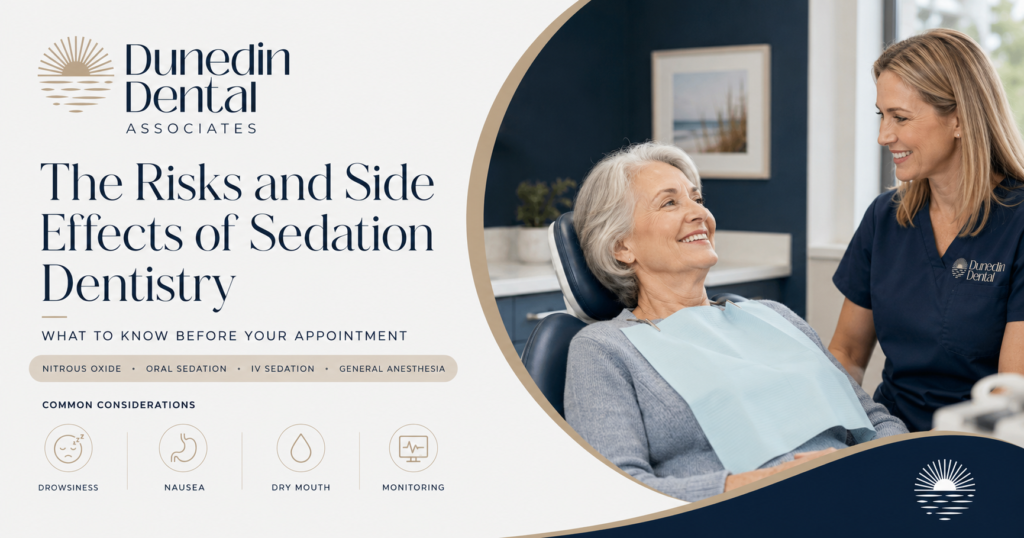
Sedation dentistry has helped millions of patients get through dental procedures they would otherwise avoid entirely. For people dealing with dental anxiety, a strong gag reflex, or the need for complex dental work, sedation makes the experience manageable — sometimes even comfortable.
But sedation also involves medication, and medication carries risks. Before considering sedation dentistry, it’s worth understanding exactly what those risks and side effects are, who is most vulnerable, and what your dental team does to keep you safe. This guide breaks it all down clearly so you can make an informed decision.
What Is Sedation Dentistry?
Sedation in dentistry refers to the use of medication to help patients relax during dental procedures. It is not the same as anesthesia, though both can be used together. The goal of sedation is to reduce anxiety, increase comfort, and in some cases create amnesic effects — meaning patients may have little or no memory of the procedure afterward.
There are several sedation options used in modern dental offices, each representing a different level of sedation:
Nitrous oxide (laughing gas) is inhaled through a mask and provides minimal sedation. Patients remain fully conscious and alert but feel calm and relaxed. The effects wear off within minutes of removing the mask.
Oral sedation involves taking an oral sedative — typically a pill or liquid sedation — before the appointment. Oral conscious sedation produces a deeper state of relaxation than nitrous oxide. Patients are still technically awake but often drowsy and have limited memory of the dental visit.
IV sedation (intravenous sedation) delivers sedative drugs directly into the bloodstream, allowing the dentist or anesthesiologist to control the level of sedation precisely and quickly. IV sedation can range from moderate conscious sedation to deep sedation depending on the dose.
General anesthesia renders patients fully unconscious and is typically reserved for extensive dental work, oral surgery, or patients with extreme dental phobia who cannot tolerate treatment any other way. General anesthesia requires specialized monitoring and is generally performed in a hospital or surgical setting.
The Benefits of Sedation Dentistry
Before discussing risks, it’s worth acknowledging why sedation dentistry exists and why it is genuinely valuable for many patients.
Severe dental anxiety affects a significant portion of the population. For some, this dental phobia leads to years of avoidance — which means untreated cavities, gum disease, and worsening dental health. Sedation makes dental care accessible for patients who would otherwise forgo it entirely.
Sedation is also beneficial for patients undergoing complex dental procedures in a single, extended appointment — such as multiple extractions, implant placements, or full-arch restorations. By reducing discomfort and anxiety throughout the procedure, sedation helps both patient and dentist work more effectively.
For patients with a strong gag reflex, limited ability to hold their jaw open, or special needs that make dental treatment difficult, sedation provides a level of cooperation and comfort that would otherwise be impossible.
Read more about the benefits of IV sedation for dental procedures at our Dunedin office.
Common Side Effects of Sedation Dentistry
Side effects are predictable, expected responses to sedation medication — they are not dangerous on their own but are worth knowing about so patients are not caught off guard after their dental appointment.
Drowsiness and Fatigue
The most common side effect of sedation dentistry is lingering drowsiness. Oral sedatives and IV sedation both produce fatigue that can last several hours after the dental procedure ends. Patients should arrange for a responsible adult to drive them home and plan to rest for the remainder of the day.
Nausea and Vomiting
Nausea is a common side effect with most forms of sedation, particularly deeper levels. IV sedation and general anesthesia carry a higher incidence of nausea than nitrous oxide. Patients are typically instructed to avoid food and drink for several hours before their appointment to reduce this risk. Medication to manage nausea can be administered if needed.
Dry Mouth
Dry mouth is a common side effect with oral sedatives and some IV sedation medications. The sedative drugs used often reduce saliva production. Staying hydrated after the procedure helps, and the effect typically resolves within a day.
Headache
Some patients experience a mild headache after sedation, particularly following nitrous oxide. This is usually brief and manageable with over-the-counter pain relief.
Memory Loss (Amnesic Effects)
This is often considered a benefit rather than a side effect, but it’s worth noting. Oral sedation and IV sedation frequently produce amnesic effects — patients remember little or nothing about the dental procedure. While many patients appreciate this, it can occasionally be disorienting. Patients should not make important decisions or sign legal documents while sedation medication is still in their system.
Confusion or Disorientation
As sedation wears off, some patients experience temporary confusion, difficulty concentrating, or a sense of grogginess. This clears within a few hours for most patients but can last longer depending on the type of sedation used and the individual’s response.
Risks of Sedation Dentistry: What Can Go Wrong
The distinction between side effects and risks is important. Side effects are expected, predictable, and generally mild. Risks refer to less common but more serious complications that require preparation and monitoring. Understanding the potential risks of sedation dentistry does not mean these outcomes are likely — it means you can make an informed choice.
Risks Associated with Oral Sedation
Using oral sedation techniques is generally safe for healthy adults, but risks exist. The sedative dose cannot be adjusted mid-procedure the way IV sedation can, which means the dentist must work with a fixed level of sedation from the start. Individual responses to oral sedatives vary considerably — what produces mild relaxation in one patient may cause deep drowsiness in another.
Risks associated with oral sedation include:
- Over-sedation if the patient metabolizes the medication more slowly than expected
- Interaction with other medications the patient is taking, which is why a complete medical history review is essential before receiving sedation
- Respiratory depression in rare cases, particularly in patients with sleep apnea or compromised breathing
- Allergic reactions to the sedative drug, though these are uncommon
Risks of IV Sedation
IV sedation provides more precise control over the level of sedation, but it also delivers medication directly into the bloodstream — making any adverse reaction faster and potentially more significant.
Risks associated with IV sedation include:
- Breathing difficulties — deeper level of sedation suppresses the respiratory drive. Continuous oxygen monitoring is essential.
- Blood pressure changes — sedation medication can cause blood pressure to drop or fluctuate. Cardiovascular monitoring is standard practice.
- Cardiovascular effects — patients with cardiovascular disease face a higher risk of cardiac complications under deep sedation.
- Anaphylaxis — a severe allergic reaction to the sedative drug is rare but possible. Trained dental teams maintain emergency equipment for this reason.
- Excessive sedation — because IV sedation works quickly, small dosing errors can produce a deeper level of sedation than intended
Risks of General Anesthesia
General anesthesia carries the highest risk profile of any sedation option in dentistry. When sedation or general anesthesia is needed for extensive procedures, it is typically performed or closely supervised by an anesthesiologist in a properly equipped facility.
Serious risks of general anesthesia include aspiration (inhaling stomach contents into the lungs), prolonged respiratory depression, and cardiovascular complications. These events are rare when proper protocols are followed, but the potential for them is why general anesthesia requires a higher level of preparation and monitoring than other forms of sedation.
Who Is at Higher Risk of Complications?
Not all patients carry the same risk when receiving sedation dentistry. Certain factors increase the likelihood of complications and should be disclosed to your dentist before any sedation is considered.
Obstructive sleep apnea. Patients with sleep apnea already have compromised airways during sleep. Sedation further relaxes the muscles that keep the airway open, increasing the risk of breathing difficulty during the procedure.
Cardiovascular disease. Heart conditions can increase sensitivity to the blood pressure and heart rate changes that sedation medication produces. Patients with cardiovascular disease should have their medical history reviewed carefully before receiving sedation.
Obesity. Higher body weight can affect both the appropriate sedative dose and the risk of airway obstruction under sedation.
Age. Children and elderly adults may respond differently to sedation medication and may require adjusted dosing. Sedation dentistry in children carries its own specific considerations.
Respiratory conditions. Chronic lung conditions such as COPD or severe asthma increase the risk of complications related to breathing under sedation.
Allergies to medications. A history of allergic reactions to sedative drugs, anesthetics, or related medications must be disclosed before any sedation appointment.
Pregnancy. Sedation during pregnancy carries risks to the developing fetus. Most dentists will delay elective sedation for pregnant patients and consult with the patient’s obstetrician when dental treatment cannot wait.
Sedation in Dentistry: Safety Protocols That Reduce Risk
The good news is that the risks of sedation dentistry are significantly reduced when proper safety protocols are in place. A well-trained dental team with the right equipment and procedures can manage sedation safely for the vast majority of patients.
Thorough pre-sedation screening. Before receiving sedation, patients should complete a comprehensive review of their medical history, current medications, allergies, and past responses to anesthesia or sedation. This screening process is how potential risks are identified before they become problems.
Appropriate monitoring throughout the procedure. Throughout the procedure, a trained provider should monitor oxygen saturation, heart rate, blood pressure, and breathing continuously. This is standard practice for IV sedation and general anesthesia, and should be followed for deeper levels of oral sedation as well.
Emergency preparedness. A properly equipped dental office that offers sedation dentistry should have emergency oxygen, reversal agents for certain sedative drugs, and trained staff who know how to respond to complications if they arise.
Patient fasting instructions. For procedures involving deeper sedation or general anesthesia, patients are typically instructed not to eat or drink for several hours beforehand. This reduces the risk of aspiration.
Post-sedation observation and discharge criteria. Patients should be observed after the procedure until they meet clear criteria for safe discharge — including stable vital signs, adequate alertness, and the presence of a responsible adult to accompany them home.
Who Is a Good Candidate for Sedation Dentistry?
Sedation dentistry is not for everyone, and not every dental procedure requires it. The best candidates for sedation include:
- Patients with severe dental anxiety or dental phobia that prevents them from proceeding with necessary treatment
- Patients undergoing extensive dental work that would otherwise require multiple appointments
- Patients with a strong gag reflex that makes dental procedures genuinely difficult
- Patients with physical or cognitive conditions that make sitting still for extended dental visits challenging
- Patients with a low pain threshold who have difficulty tolerating standard local anesthesia alone
Who Should Avoid Sedation Dentistry
Patients for whom sedation may not be appropriate — or who require additional medical evaluation before sedation — include those with:
- Poorly controlled cardiovascular disease
- Severe respiratory conditions
- Active obstructive sleep apnea without a CPAP device available
- Known allergies to sedative drugs
- Pregnancy (in most non-emergency cases)
- Certain neurological conditions that affect medication response
The decision about whether sedation is appropriate is made collaboratively between you and your dentist based on your full medical history and the type of procedure involved.
Preparing for Sedation Dentistry: What You Should Do
If you and your dentist have determined that sedation is appropriate for your upcoming dental procedure, preparation matters.
Disclose your full medical history. Do not leave out medications, supplements, allergies, or prior reactions to anesthesia — even if they seem unrelated. Everything your dentist knows helps ensure your sedation is managed safely.
Follow fasting instructions exactly. If your dentist instructs you not to eat or drink before the appointment, follow those instructions. Fasting guidelines vary by type of sedation; confirm specifics with your dental office.
Arrange transportation. You should not drive yourself home after oral sedation or IV sedation. Plan for a trusted adult to take you home and stay with you for the first few hours afterward.
Wear comfortable clothing. Loose, comfortable clothing allows for easier monitoring and makes the experience more comfortable.
Ask your questions beforehand. If you have concerns about the sedation, bring them up before the appointment — not during. Knowing what to expect reduces anxiety and helps the procedure go smoothly.
Is Sedation Dentistry Worth It?
For patients who would otherwise avoid necessary dental care due to anxiety, fear, or complex treatment needs, sedation dentistry is often absolutely worth it. Untreated dental problems — cavities, infections, gum disease — only worsen with time and ultimately cost more to treat. Sedation removes the barrier that prevents many patients from accessing the dental health care they need.
The risks of sedation dentistry are real, but they are manageable when the right protocols are in place and the right patients are selected. The incidence of side effects is generally low, most side effects are mild and temporary, and serious complications are uncommon in healthy patients under appropriate supervision.
Considering sedation dentistry? Talk to your dentist openly about your concerns, your medical history, and what you’re hoping sedation will make possible. That conversation is the foundation of a safe and successful experience.
At Dunedin Dental Associates, we offer sedation dentistry options tailored to each patient’s needs and anxiety level. Whether you’re considering oral sedation or IV sedation for a more comfortable dental experience, we’re here to walk you through your options and help you make the best decision for your oral health and overall health.
Schedule a consultation today to discuss your sedation options with our team.
Frequently Asked Questions About Sedation Dentistry Risks and Side Effects
Q: Is sedation dentistry safe?
For most healthy adults, sedation dentistry is safe when proper screening, monitoring, and emergency protocols are in place. Risk increases with underlying health conditions, which is why a thorough medical history review is essential before any sedation appointment.
Q: Will I feel pain during sedation?
Sedation reduces anxiety and in deeper levels can reduce pain perception, but it is typically used alongside local anesthesia, which is what actually numbs the dental area. You should not feel sharp pain during a dental procedure performed under appropriate sedation and local anesthesia.
Q: How long do the side effects of oral sedation last?
Side effects of oral sedation — including drowsiness, dry mouth, and grogginess — sedation typically last between four and eight hours. Some patients feel effects the following morning. Avoid driving and operating machinery until effects have fully resolved.
Q: Can children receive sedation dentistry?
Yes, but pediatric sedation requires special dosing considerations and should be performed by providers experienced in treating children. The risks and appropriate sedation options for children are different from those for adults. Learn more about sedation dentistry for children here.
Q: What’s the difference between conscious sedation and deep sedation?
Conscious sedation (including oral conscious sedation and moderate IV sedation) allows patients to remain awake and responsive, though relaxed. Deep sedation brings patients to the edge of unconsciousness, where they may not respond to verbal commands. General anesthesia renders patients fully unconscious. Each level carries progressively higher risk and requires more intensive monitoring.
Q: What should I tell my dentist before receiving sedation?
Disclose all current medications (including supplements and over-the-counter drugs), any known drug allergies, medical conditions — especially cardiovascular or respiratory — and any previous reactions to sedation or anesthesia. This information directly affects which sedation options are safe for you.