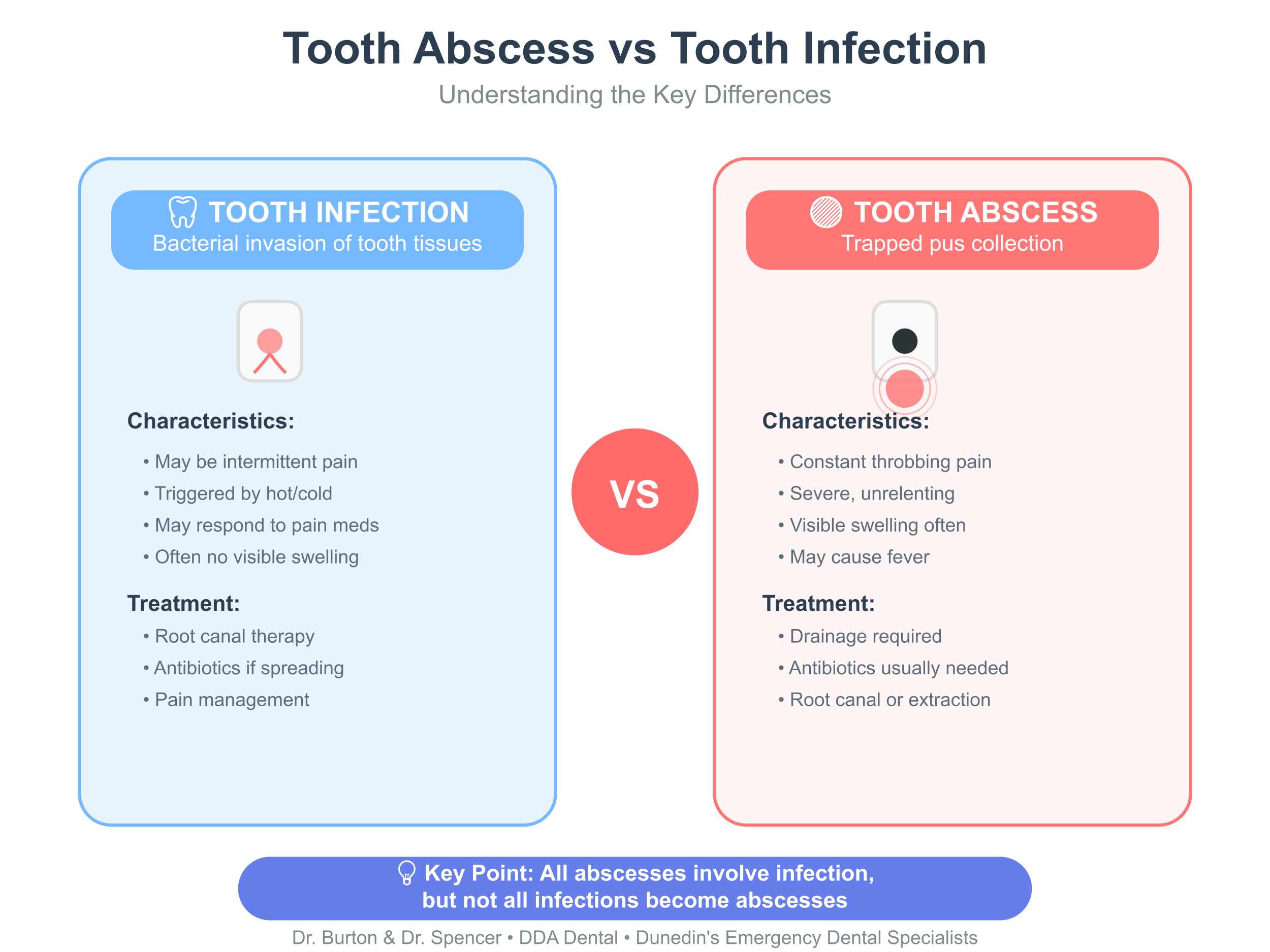
An emergency dentist can usually provide pain relief, antibiotics when indicated, drain any source of subsequent infection, and establish a plan for definitive treatment. Studies show that most dental problems are better and more efficiently dealt with by intervention from a professional in a timely manner to improve outcome and avoid complications.
Key takeaways:
- Emergency dentists can and do prescribe antibiotics when appropriate
- Professional examination is required before antibiotic prescription
- Urgent care provides temporary relief but dental follow-up is essential
- Definitive dental treatment is necessary to prevent recurrence
- Early intervention prevents serious complications
When dental pain strikes, especially that stemming from an infection diagnosis, getting answers quickly are essential. A recent research paper published in the Journal of Dental Research supports limited evolving research, dental infection is an extremely common and potentially serious disease caused predominantly by dental caries, where orofacial pain (pain originating from the jaw, teeth, gum and face regions) reaches high degrees of intensity, comparable to other painful diseases, such as renal colic.
As one of Dunedin’s leading dental practices, DDA Dental deals with a considerable amount of experience managing emergencies dental patients. In this guide, you can expect, what you experience when looking for emergency treatment for a tooth infection, according to current evidenced-based and research-supported protocols and clinical experiences.
What are Dental Infections: The Science Behind the Pain
A dental infection happens when bacteria exploit the protective layers of the tooth usually caused by decay, cracks or trauma. The infection usually progresses and forms a dental abscess – a pocket of pus that can develop around the root of the tooth and/or in the gums. Dental abscesses can progress quickly. Literature mentions dental infections as being the most common cause to almost 50% of deep neck abscesses, and dental infections were the etiology for over 90% of cases with Ludwig angina – a rapidly progressive and potentially fatal infection.
Common symptoms include:
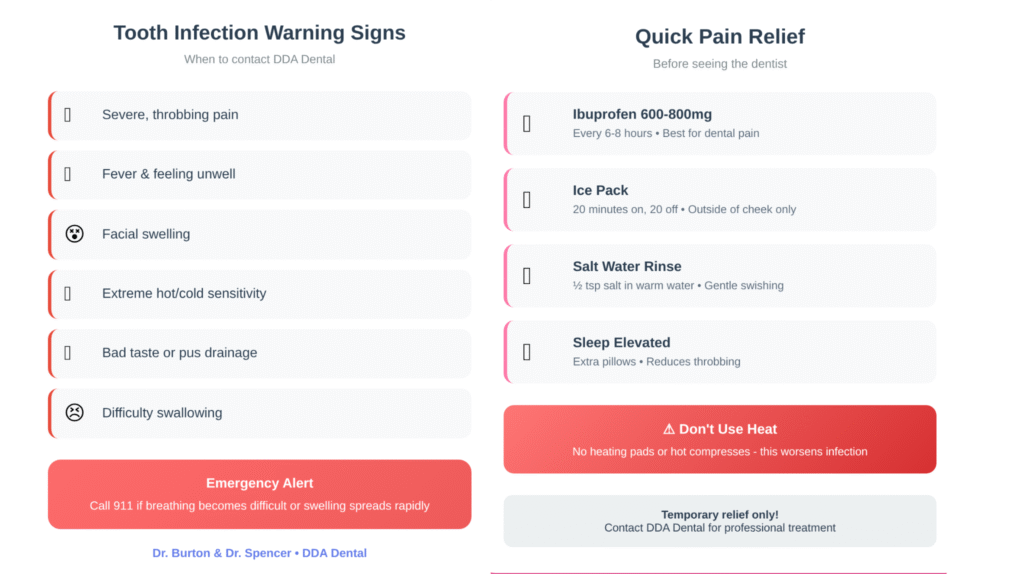
- Severe, throbbing pain
- Swelling in face, gums, or jaw
- Fever and feeling unwell
- Sensitivity to temperature
- Difficulty swallowing or opening mouth
- Bad taste or pus drainage
- Tender, swollen lymph nodes in the neck
- Red, swollen bump on the gums (visible abscess)
Can an Emergency Dentist Give You Antibiotics?
Yes, emergency dentists regularly prescribe antibiotics for dental infections. but emerging research is now telling us that both analgesics and antibiotics have limited scope in the field of dentistry, and usually should be considered only as adjunct to dental surgery.
When antibiotics are typically prescribed:
- Visible facial swelling extending beyond the immediate tooth area
- Fever or systemic signs of infection
- Compromised immune system
- Signs of spreading infection
- Before certain dental procedures in high-risk patients
Most commonly prescribed antibiotics include:
- Amoxicillin (first-line choice for most patients)
- Clindamycin (for penicillin-allergic patients)
- Metronidazole (often combined with other antibiotics)
Studies published in PMC show that identifying antibiotics for empirical use in most dental infections indicates a combination of clindamycin and metronidazole may be used in penicillin-allergic patients.
Important note: Antibiotics control bacterial growth and reduce symptoms but do not eliminate the infection. The infected tooth still requires professional treatment to prevent recurrence.
Will a Dentist Give You Antibiotics Without Seeing You?
Professional standards require examination before prescribing antibiotics. Here’s why this approach protects your health:
Clinical assessment is essential because:
- Not all dental pain indicates bacterial infection
- Some conditions mimic infection but require different treatment
- Proper diagnosis prevents inappropriate antibiotic use
- Drug allergies and interactions must be evaluated
- Professional liability standards require examination
What you can expect:
- Same-day emergency appointments for severe symptoms
- Telephone triage for initial assessment
- Temporary pain management recommendations
- Referral to hospital emergency if life-threatening symptoms present
Immediate Pain Relief: Managing Dental Abscess Pain Before Your Appointment
While professional dental treatment is essential, Dr. Matthew Burton and our team understand that dental abscess pain can be excruciating and may require immediate management before you can reach our office. Here are safe, temporary measures to help control pain and prevent further complications:
Safe Pain Management at Home:
Over-the-Counter Medications:
- Ibuprofen (Advil, Motrin): 600-800mg every 6-8 hours (most effective for dental pain due to anti-inflammatory properties)
- Acetaminophen (Tylenol): 1000mg every 6 hours (can be combined with ibuprofen)
- Combination approach: Alternate ibuprofen and acetaminophen every 3 hours for maximum pain control
Cold Therapy:
- Apply ice pack wrapped in a thin towel to the outside of your cheek
- Use for 20 minutes on, 20 minutes off
- Never apply ice directly to skin or inside the mouth
- Helps reduce swelling and numb pain
Salt Water Rinse:
- Mix 1/2 teaspoon salt in 8 oz warm (not hot) water
- Gently swish for 30 seconds, then spit out
- Repeat 3-4 times daily
- Helps reduce bacteria and may provide mild pain relief
What NOT to Do:
- Don’t apply heat to the area (can worsen swelling and spread infection)
- Avoid extremely hot or cold foods and drinks
- Don’t chew on the affected side
- Never place aspirin directly on the tooth or gums (can cause chemical burns)
- Don’t ignore worsening symptoms
Important Warning Signs – Seek Immediate Medical Attention:
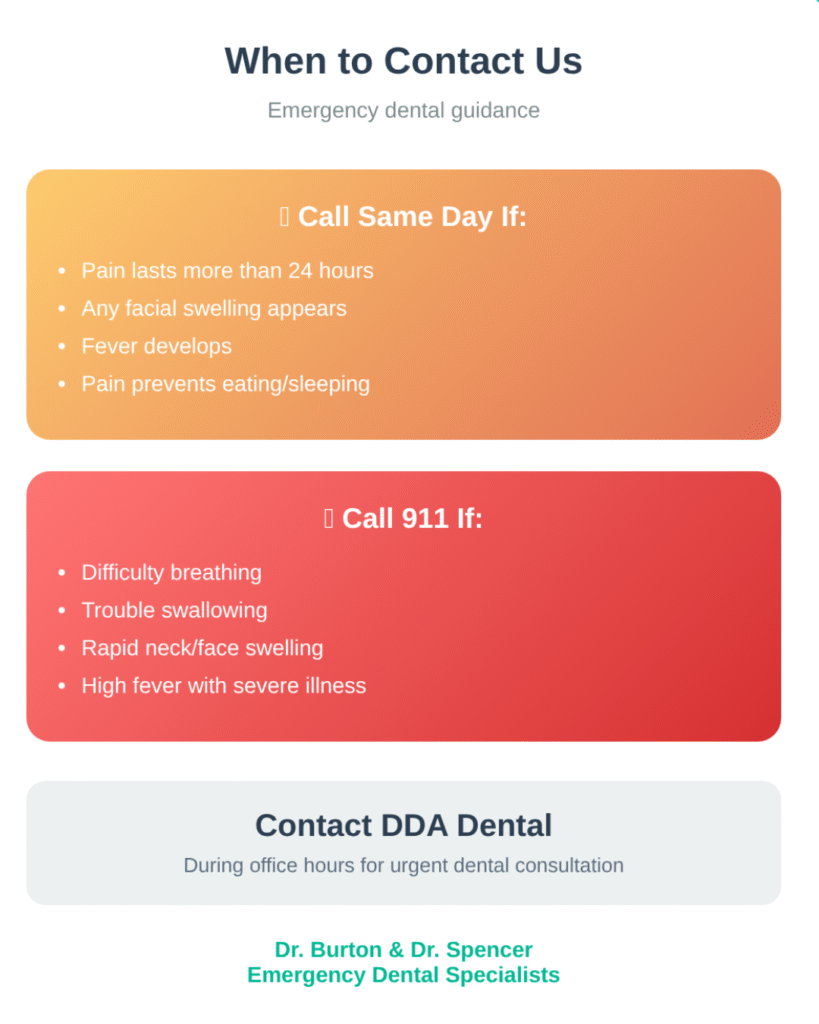
If you experience any of these symptoms, contact emergency services immediately as they may indicate a life-threatening complication:
- Difficulty breathing or swallowing
- High fever (over 101°F/38.3°C)
- Rapid facial swelling, especially around the eyes
- Severe weakness or feeling faint
- Nausea and vomiting
Remember: These measures provide temporary relief only. A dental abscess requires professional treatment to eliminate the infection source and prevent serious complications.
Will Urgent Care Give Antibiotics for a Tooth Infection?
Urgent care centers can provide temporary relief but have limitations. The literature suggests continued suboptimal treatment of congenital dental pain and infection with drug prescriptions, rather than surgical or therapeutic dental procedures, even by general medical physicians or emergency medicine physicians.
When urgent care might help:
- After-hours when dental services unavailable
- Clear signs of systemic infection (fever, facial swelling)
- Temporary relief before dental appointment
Limitations to consider:
- Cannot perform definitive dental procedures
- Limited specialized dental knowledge
- Treatment is temporary – dental follow-up essential
- May lack proper diagnostic equipment
Our recommendation: Contact DDA Dental’s emergency line first. We maintain after-hours availability for true dental emergencies and can often see patients the same day.
Will the Dentist Give Me Antibiotics for an Infected Tooth?
Yes, when clinically indicated. Our treatment approach follows evidence-based protocols established by leading dental research institutions.
Assessment factors include:
- Extent of infection spread
- Presence of systemic symptoms
- Patient’s medical history and risk factors
- Severity of pain and swelling
Research by Moratin et al. found that more severe infection, a history of diabetes, and the use of clindamycin were associated with an increased risk for the development of osteomyelitis in patients with dental abscess.
Our treatment protocol typically includes:
- Comprehensive examination and radiographic assessment
- Pain management (prescription or over-the-counter medications)
- Antibiotic therapy when systemic infection is present
- Immediate drainage if abscess is present
- Definitive treatment planning (root canal or extraction)
- Follow-up care instructions
Why Choose DDA Dental for Emergency Care
As Dunedin’s leading dental practice under the expert guidance of Dr. Burton and Dr. Spencer, we provide:
Immediate availability: Same-day emergency appointments during office hours with urgent consultation options
Advanced diagnostics: Digital radiography and 3D imaging for precise diagnosis under Dr. Burton and Dr. Spencer’s clinical oversight
Comprehensive treatment: From pain relief to complex oral surgery under one roof, with both doctors trained in advanced emergency protocols
Evidence-based protocols: Dr. Burton and Dr. Spencer ensure all treatment plans are based on latest research and clinical guidelines
Experienced team: Our specialists, led by Dr. Burton and Dr. Spencer of Dunedin , are trained in emergency dental care and infection management
Follow-up care: Comprehensive treatment planning by our clinical directors to prevent future emergencies
The Bottom line : Conclusion to dental emergency for a dental infection
The fact that Our Drs. have a lot of clinical experience shows that timely and professional dental treatment of a tooth infection can improve prognosis and reduce the risk of serious complications. In our practice, we have seen the importance of responding to dental radiographically, clinically or pseudopathologically dental pain and infection to prevent the further worsening of health and the increase the risk of serious complications that may threaten life like sepsis or airway occlusion or even overdose of analgesics.
If you are having dental pain or notice any signs of infection, we don’t want you to wait. Call Dunedin Dental Associates Dunedin Dentists immediately within office hours. Dr. Burton and Dr. William Spencer have protocols in place for emergencies that allow you to receive prompt, professional care according to their clinical training, and that will be completed with the assessment and knowledge that has made DDA Dunedin’s best dental practice.
It is important that you remember – dental infection can spread rapidly and lead to significant consequences. When in doubt, we recommend obtaining a professional assessment. Your health and well-being is our number one priority.
Read Also : Dental Emergency Guide and what are emergency dental treatments ?